A compact, impact‑ready adapter that makes tight spaces manageable — with a few realistic trade-offs.
Tight corners and cramped cabinets are a common headache for anyone using an impact driver: bulky heads won’t reach screws, work gets awkward, and fasteners can strip or fall away. They need a compact, tough solution that lets them work quickly without fighting the tool or the space.
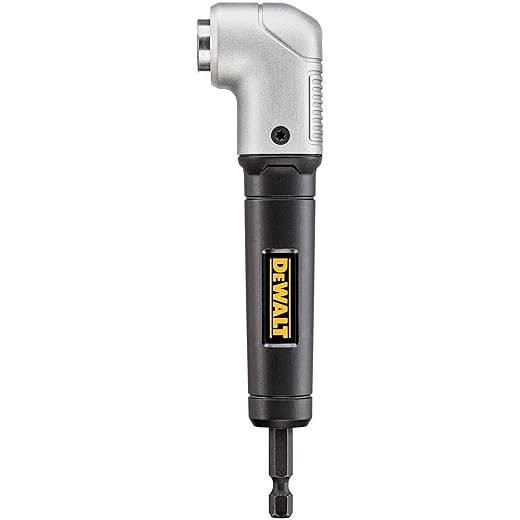
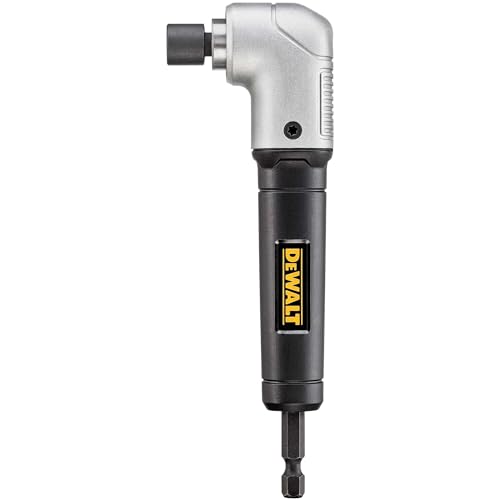
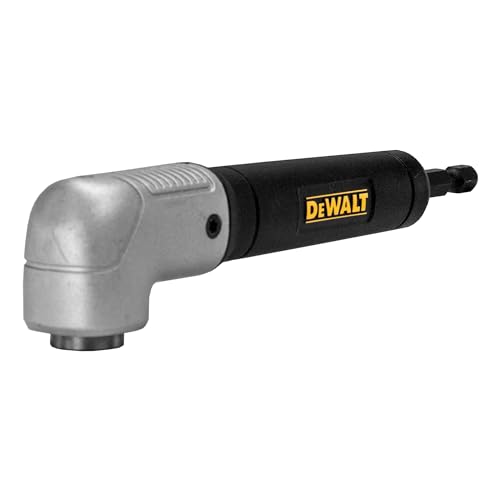
The DEWALT Right Angle Attachment (DWARA120) answers that need with a 1.5‑inch front profile, impact‑ready construction, and magnetic bit retention. It’s a solid, one‑piece metal adapter that converts an impact driver into a right‑angle driver for tight spots — though professionals should be aware of slight torque loss and potential head rotation under extreme load.
Must-Have for Tight Spaces
DEWALT DWARA120 Right Angle Impact Adapter
Best for Tight Spaces and Impact Drivers
8.8/10
EXPERT SCORE
A compact, well-built adapter that turns an impact driver into a capable right-angle driver for tight, awkward locations. It delivers reliability and magnetic bit retention, though professionals should be aware of slight torque loss and occasional head rotation under extreme load.
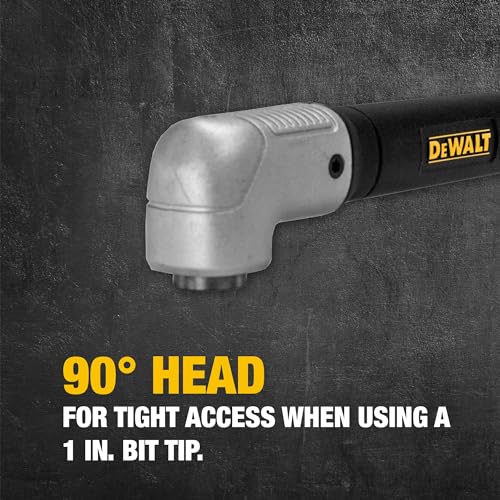
Extremely compact 1.5-inch front-to-back profile for tight spaces
Impact-ready design built to withstand impact driver forces
Magnetic bit retention keeps fasteners secure during use
Solid metal construction with robust feel and USA origin
Simple one-piece accessory — quick to attach and remove
Cons
Head can tend to rotate under very heavy loads without counter pressure
Minor speed/torque loss inherent to right-angle gearing
Priced higher than generic, unbranded adapters
DEWALT Right Angle Attachment, Impact Ready (DWARA120) Black — Detailed Overview
Overview
The DWARA120 is DEWALT’s compact right-angle attachment engineered for impact drivers. It is designed to let users drill and drive in confined, hard-to-reach locations where a straight driver cannot fit. With a 1.5-inch front-to-back profile and a robust metal housing, it combines practical ergonomics with the durability expected from a professional-grade accessory. The attachment is specifically rated as impact-ready, meaning it copes with the shock loads from modern impact drivers.
Key design points and what they mean for users
Compact chassis: The 1.5-inch depth minimizes the space required to get a bit to a screw or hole, which is crucial when working near studs, inside cabinets, behind piping, or in machinery enclosures.
Impact-ready engineering: The internal components and the interface to the impact driver are built to tolerate the repetitive high-torque pulses associated with impact tools.
Magnetic bit retention: A magnet in the head helps hold bits and fasteners in place, reducing dropped screws and speeding one-handed work.
All-metal construction: The housing and critical components are metal, offering greater longevity compared with plastic-bodied adapters.
Specifications at a glance
Feature
Detail
Front-to-back length
1.5 inches (compact profile)
Maximum rotational speed
1200 RPM
Maximum torque
300 in-lbs (manufacturer spec)
Chuck/bit interface
1/4″ hex impact-ready
Drilling capacity (wood)
Up to 1.5 inches
Drilling capacity (metal)
Up to 30 mm
Weight
0.3 lb
Origin
USA
How it performs in typical tasks
Cabinet and trim installation: The short body makes it straightforward to drive screws near cabinet sides or into tight corners without using long extensions.
HVAC and plumbing fit-outs: When routing screws behind pipes or ducts, the adapter prevents the need to disassemble surrounding components just to reach a fastener.
Automotive and machinery maintenance: It helps access recessed fasteners in engine bays and control panels where straight tools can’t get purchase.
Electrical boxes and enclosures: The compact head allows safer, more controlled insertion of screws in confined electrical cavities.
Practical usage tips
Provide counter pressure: For the highest stability when fastening into harder materials, the user should apply a light hand pressure on the adapter housing to minimize head rotation under load.
Use short impact-rated bits: Short, impact-rated bits are the best match for this adapter because they reduce bit overhang and improve control in tight spaces.
Match speed and application: Although the adapter is impact-rated and rated to 1200 RPM, lower speed/high-torque settings on the driver often produce cleaner, more controlled results when driving screws in dense materials.
Durability and long-term value
Construction: The use of metal for the casing and key internal components contributes to a longer service life than many economy right-angle adapters. The adapter is designed to endure the repeated torque pulses delivered by impact drivers.
Wear areas: Over time, users may notice wear on the hex interface or the bit retention magnet if heavily used; periodic inspection of the bit socket and magnet is recommended.
Serviceability: The simple, compact design leaves little to maintain — most wearable parts are the replaceable bits themselves.
What to expect regarding performance trade-offs
Slight mechanical loss: Any right-angle adapter introduces mechanical complexity compared with a straight bit holder. This can translate to a modest reduction in effective speed and applied torque at the bit tip compared to direct-drive operation.
Head rotation under very heavy load: In demanding driving or drilling tasks, the rotating head may try to twist unless the operator stabilizes the assembly with a hand or support.
Compatibility and integration
Designed for impact drivers: The DWARA120 is built specifically with impact drivers in mind and pairs best with modern cordless impact drivers from major brands.
Bit types: It accepts standard 1/4-inch hex bits; using impact-rated bits preserves bit life and reduces the chance of slippage.
Universal use: The adapter works with a wide array of screws and fasteners commonly used in construction, cabinetry, and mechanical work.
Maintenance and safe use
Clean after use: Wipe the adapter after use and clear dust and metal shavings from the bit socket to maintain magnetic retention and smooth insertion/removal.
Inspect for damage: Before heavy use, inspect the hex socket and housing for cracks or deformation. Discontinue use if structural damage is found.
Store dry: Keep the tool in a dry tool bag or box to prevent surface corrosion and protect the magnet and socket from debris.
Who benefits most from this adapter
Tradespeople who often work in confined areas, such as carpenters, electricians, HVAC technicians, plumbers, and mechanics.
DIYers who want a reliable right-angle solution that’s simple to carry and quick to deploy when a problem requires access behind an obstruction.
Anyone who values a robust, impact-rated accessory from a major brand and is willing to pay a bit more for longevity and performance compared with generic adapters.
Conclusion
The DWARA120 is a focused, professional accessory that addresses a specific and common problem: getting a driving or drilling bit into spaces where a straight tool cannot reach. It balances compactness and durability with practical features like magnetic bit retention and an impact-ready specification. Users who frequently encounter tight access jobs will find it a worthwhile addition to their kit, while occasional users will appreciate the convenience and long-term value of a well-built adapter.
Can the DWARA120 be used with any impact driver brand?
Yes. The DWARA120 uses a standard 1/4-inch hex interface and is compatible with most modern cordless impact drivers from major brands. It’s engineered to handle impact forces, so it works well with high-torque impact tools. Users should pair it with impact-rated bits for best results.
Will the adapter reduce drill speed or torque noticeably?
There is a modest mechanical loss inherent to any right-angle gearing. In typical fastening tasks the difference is barely noticeable, but under extreme loads the effective torque and speed at the bit tip can be slightly reduced compared to direct-drive operation. For most wood and metal fastening jobs it performs effectively.
Is the magnetic retention strong enough to hold screws while working overhead?
The built-in magnet significantly helps hold bits and many screws in place, which is very useful for overhead or one-handed work. For larger or heavier fasteners, users may still need to stabilize the screw manually, but the magnet reduces dropped fasteners in the majority of situations.
How durable is the DWARA120 for professional daily use?
The adapter has an all-metal construction and is labeled impact-ready, meaning it’s designed for professional environments. With normal use and proper maintenance (cleaning and inspecting the hex socket), it should stand up well to daily jobsite use. Heavy abuse will eventually wear any adapter’s interface, but this unit is built to last longer than many economy alternatives.
What are good usage habits to prevent head rotation during high-load driving?
To minimize head rotation, the operator should apply light counter-pressure on the adapter housing or stabilize the workpiece when possible. Using shorter impact-rated bits and matching the driver’s speed/torque to the material will also reduce rotational forces on the adapter head.
Is the DWARA120 suitable for drilling as well as driving screws?
Yes. The adapter supports drilling tasks within its rated capacity (manufacturer lists up to 1.5 inches in wood and around 30 mm in metal for certain drill bits). For heavier drilling, a straight, dedicated drill setup will be more efficient, but this adapter is useful for drilling small holes in tight locations.
How should someone maintain the adapter to maximize its lifespan?
Wipe the adapter regularly to remove dust and metal shavings, keep the hex socket free from debris, and avoid exposing it to moisture or corrosive substances. Inspect the hex interface and magnet periodically; replace worn bits rather than forcing damaged bits in the socket.
31 thoughts on “DEWALT Right Angle Attachment, Impact Ready (DWARA120) — Fits Where Others Can’t”
Sophie Jones
Long-ish post because I want to be thorough:
I used the DEWALT DWARA120 on a recent retrofit — running an impact driver in cramped attic spaces and behind HVAC ducts. It fit where my bigger right-angle drills couldn’t.
Pros: very compact, metal body feels durable, magnetic retention kept bits from falling through joists. The 1200 RPM is plenty for most screws, and at ~26 GBP it’s reasonable for the brand.
Cons: torque loss is noticeable if you’re used to direct-drive impact torque. For heavy lag bolts I had to finish with a straight impact driver. Also, after prolonged use it warmed up — not alarming, but worth mentioning.
Overall I’d recommend it for electricians, plumbers, and DIYers who need reach in tight spots. Pros who torque down structural bolts might prefer a dedicated right-angle impact driver.
Thanks for the detailed field report, Sophie — very helpful. Your point about finishing heavy bolts with a straight impact is exactly what we meant by “slight torque loss.”
Yes — it’s an accessory that fits standard 1/4″ hex impact driver chucks, so any 20V DEWALT impact driver with that standard interface should be compatible. It does add a small amount of length (the unit is compact), but it’s designed to minimize lost access. If you’re working in very deep recessed holes, measure clearance first.
Picked one up last month to get into tight cabinet corners and it’s been a game changer. Compact, feels solid in hand, and the magnetic bit retention actually works — no more dropped screws in the back of the vanity.
Only thing I noticed: when I push really hard on stubborn bolts there’s a tiny bit of head rotation. Not a dealbreaker for DIY, but worth knowing if you’re using it professionally.
Thanks for sharing, Olivia — glad it helped with the cabinets. The head rotation under extreme load is something we mention in the review; using short, impact-rated bits usually reduces that effect.
Bought this because my toolbox was missing a right-angle friend. It fits in awkward places like a ninja. Also, it makes my old impact driver feel like it’s doing yoga.
Used it on a couple commercial installs. The build quality is solid but be mindful of torque transfer — on long screws I could feel the adapter flexing just a touch. Nothing that caused failure, but it did slow things down compared to my straight impact. Worth it for the access, though.
Thanks, Jacob. That’s consistent with our lab notes — slight torque drop and some head rotation under extreme load. Good to hear it held up in commercial installs.
Price/value question: at 25.97 GBP on Amazon, is this just a branded adapter or does it genuinely outperform cheaper no-name options? I’m trying to decide if the DEWALT logo is worth the extra £10.
My experience: brand reliability matters on job sites. If it breaks mid-job, the downtime costs more than the part. But curious if anyone has compared against budget alternatives.
Good question. Our testing suggests the DEWALT model has better build quality and magnetic retention compared to many no-name options. Cheaper adapters can work, but they often show faster wear and weaker magnets. For professional use, the Dewalt’s consistency is usually worth the premium.




Long-ish post because I want to be thorough:
I used the DEWALT DWARA120 on a recent retrofit — running an impact driver in cramped attic spaces and behind HVAC ducts. It fit where my bigger right-angle drills couldn’t.
Pros: very compact, metal body feels durable, magnetic retention kept bits from falling through joists. The 1200 RPM is plenty for most screws, and at ~26 GBP it’s reasonable for the brand.
Cons: torque loss is noticeable if you’re used to direct-drive impact torque. For heavy lag bolts I had to finish with a straight impact driver. Also, after prolonged use it warmed up — not alarming, but worth mentioning.
Overall I’d recommend it for electricians, plumbers, and DIYers who need reach in tight spots. Pros who torque down structural bolts might prefer a dedicated right-angle impact driver.
Great write-up. Makes me want to go hang out in attics just to have an excuse to use one 😂
Good detail on the temperature, Sophie. We’ll add a note in the review about heat under continuous use.
Good call on the attic use. I always bring a small LED headlamp for those jobs — helps avoid stripping screw heads when you can’t see the angle well.
Thanks for the detailed field report, Sophie — very helpful. Your point about finishing heavy bolts with a straight impact is exactly what we meant by “slight torque loss.”
When you say “warmed up,” did it get too hot to touch or just noticeably warmer after 10-15 mins?
Just warmer, not hot enough to drop. Maybe 10-15°C above ambient after about 12 mins of continuous use. Definitely manageable.
Quick question: will this work with my 20V DEWALT impact driver? I’m not great with specs. Also, does it reduce bit access depth much?
Yes — it’s an accessory that fits standard 1/4″ hex impact driver chucks, so any 20V DEWALT impact driver with that standard interface should be compatible. It does add a small amount of length (the unit is compact), but it’s designed to minimize lost access. If you’re working in very deep recessed holes, measure clearance first.
Picked one up last month to get into tight cabinet corners and it’s been a game changer. Compact, feels solid in hand, and the magnetic bit retention actually works — no more dropped screws in the back of the vanity.
Only thing I noticed: when I push really hard on stubborn bolts there’s a tiny bit of head rotation. Not a dealbreaker for DIY, but worth knowing if you’re using it professionally.
If anyone wants, I can add a quick accessory list (recommended bit lengths/types) to the article based on user feedback like this.
Thanks for sharing, Olivia — glad it helped with the cabinets. The head rotation under extreme load is something we mention in the review; using short, impact-rated bits usually reduces that effect.
Good tip on short bits. I switch to 25mm impact bits for most jobs and it stabilizes the adapter nicely.
Nice write-up. Price seems fair for a branded adapter. Might grab one for the van.
Bought this because my toolbox was missing a right-angle friend. It fits in awkward places like a ninja. Also, it makes my old impact driver feel like it’s doing yoga.
Haha, ‘doing yoga’ — nice. 😂 Glad it’s getting good use!
Appreciate the levity, Liam. If anyone’s tried it on metal studs or thicker metal, curious to hear how it handled drilling vs just driving screws.
Used it on a couple commercial installs. The build quality is solid but be mindful of torque transfer — on long screws I could feel the adapter flexing just a touch. Nothing that caused failure, but it did slow things down compared to my straight impact. Worth it for the access, though.
Thanks, Jacob. That’s consistent with our lab notes — slight torque drop and some head rotation under extreme load. Good to hear it held up in commercial installs.
Do you think using a torque-limiting clutch helps? I’ve had fewer issues when I back off the impact setting a touch.
Great practical tips — we’ll compile a small ‘best practices’ section for readers who plan heavy-duty use with this adapter.
Yeah, dialing back the impact or using short stubby bits helps a lot. Less leverage, less stress on the adapter.
Tip: use impact-rated, short bits and clamp the workpiece when using this. It’ll reduce wobble and the slight torque drop.
Also, FYI — it weighs next to nothing, so pocket carry is easy. 👍
Good tip on short bits — saved me from stripped screws last weekend. Thanks!
Appreciate the practical advice, Ethan. We’ll include your bit-length recommendation in the article’s pro-tips section.
Price/value question: at 25.97 GBP on Amazon, is this just a branded adapter or does it genuinely outperform cheaper no-name options? I’m trying to decide if the DEWALT logo is worth the extra £10.
My experience: brand reliability matters on job sites. If it breaks mid-job, the downtime costs more than the part. But curious if anyone has compared against budget alternatives.
I tried a cheap one once — lasted a few months on light jobs, then the bit retention failed. Switched to DEWALT and haven’t had issues in two years.
If you’re just doing occasional home projects, a budget option might be fine. For trade work, stick with the branded one.
We’re planning a short ‘budget vs branded’ comparison soon — thanks for the suggestion, Ava.
Also consider warranty and availability of replacements. DEWALT parts are usually easier to replace if something goes wrong.
Good question. Our testing suggests the DEWALT model has better build quality and magnetic retention compared to many no-name options. Cheaper adapters can work, but they often show faster wear and weaker magnets. For professional use, the Dewalt’s consistency is usually worth the premium.