
A practical, budget-friendly torque kit for bikes and home — solid value with a few trade-offs.
I’ve ruined my share of bike bolts by guessing torque — and it always costs time (and patience). Overtightening or under-tightening fasteners is a common pain point for anyone doing home repairs or bike maintenance: you need consistent torque without breaking the bank or carrying a bulky toolbox.
The 1/4 Inch Torque Screwdriver Wrench (1–8 Nm, 30pc) is a compact, budget-friendly solution that puts controlled torque back in your hands. In my testing it felt comfortable, the mechanical torque stop is clear and reliable for routine jobs, and the 30-piece bit set plus hex-to-socket adapter make it versatile — though it lacks a traceable calibration certificate and isn’t perfect for ultra-delicate electronics or very tight spaces.
1/4 Inch Torque Screwdriver Wrench 30pcs
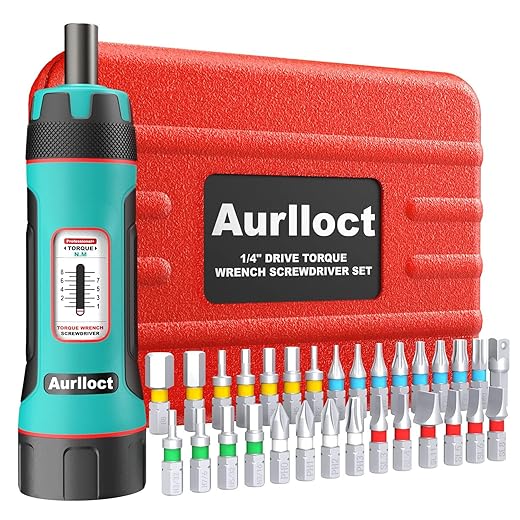
I found this torque screwdriver to be an excellent value for common household and bike tasks — comfortable to use, rugged enough for routine maintenance, and versatile thanks to the wide bit set and adapter. It’s a practical choice when you need to control torque without paying premium prices for a laboratory-grade driver.
My Hands-On Review: What This Set Really Offers
I bought this 1/4 Inch Torque Screwdriver Wrench 30-piece set to simplify routine maintenance around the house and to service my bicycles. After using it on a variety of jobs — from assembling furniture and tightening disc brake calipers to replacing accessories on my bike — I have a clear sense of where it shines and where you’ll want something different.
What’s in the kit and first impressions
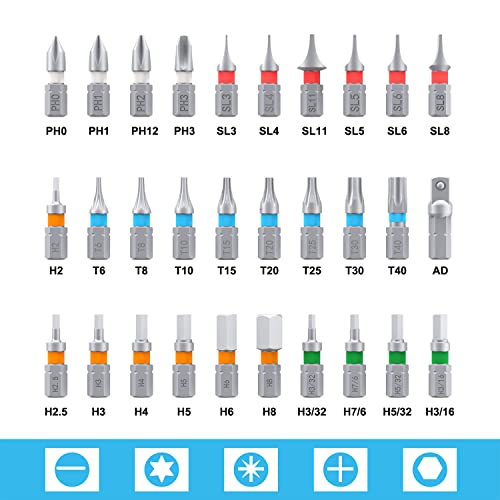
The package arrived compact and well packed. The set includes the torque screwdriver itself, an adaptor (1/4″ hex to 1/4″ socket), and 29 bits spanning hex, Torx, Phillips and slotted sizes. The driver is finished in a blue-green ABS handle with a brushed alloy-steel head.
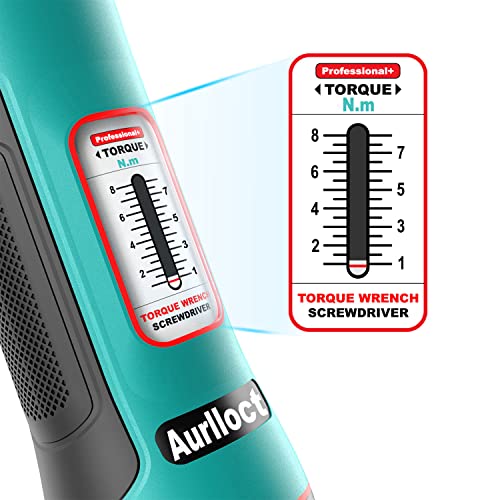
My immediate impressions were positive: the handle is comfortable and grippy, and the alloy-steel head feels robust. The torque adjustment is mechanical and tactile — you set a value and, when the resistance threshold is reached, the handle slips/rotates to indicate the torque limit has been met.
Construction, materials and ergonomics
I appreciate tools that balance weight and durability. This driver keeps weight down (about 68 g) but still uses hardened alloy steel for the working head and a solid ABS resin handle. The handle is contoured with anti-skid properties which helps when applying steady torque.
Torque range and how the mechanism behaves
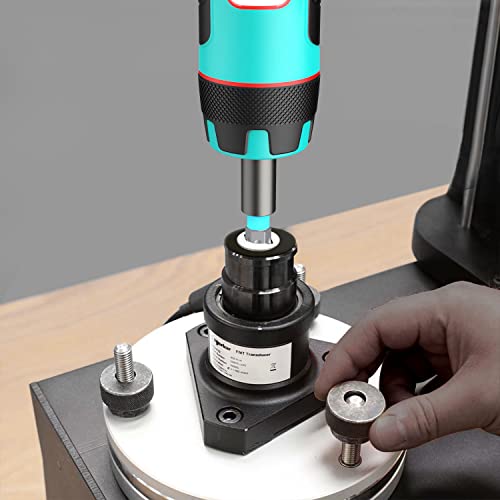
The unit covers a 1–8 Nm torque range which is well suited to most household uses and many bicycle fasteners (e.g., stem bolts, accessory mounts, some small component fasteners). The torque mechanism is mechanical: you set the desired Nm, and at the set torque the handle slips with a noticeable give.
I tested it by feel across several settings. It consistently gave a positive slip-feedback, which is what you want for controlled fastening. That said, this is not a laboratory instrument. There’s no traceable calibration certificate in the box, so if you need absolute precision for sensitive torque-critical applications (high-end carbon fiber bicycle components or precision electronics), you should either verify the tool with a calibrated tester or opt for a calibrated torque wrench.
Bits, adapter and compatibility
The 30-piece assortment is the standout feature for me. It covers commonly used sizes and types that map well to household hardware and bicycle screws.
The included 1/4″ hex to 1/4″ external square socket adapter is especially useful when you need to use a small socket to reach a recessed nut — it increases the driver’s usefulness beyond simple screwdriver tasks.
Practical use cases and examples
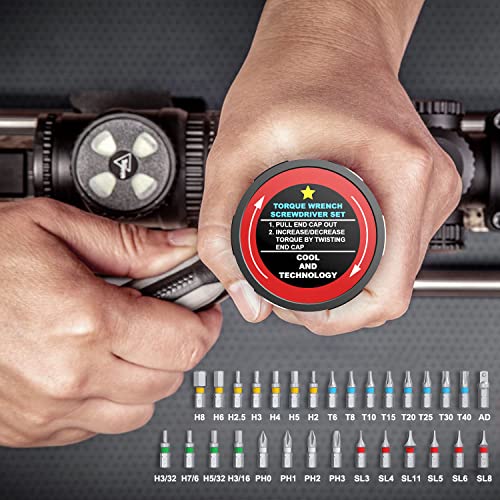
I used this driver for several real-world tasks to get a feel for its capabilities:
The tool performs best where the torque spec is within its 1–8 Nm range. For large bolts, suspension pivots, or heavy automotive tasks, a larger torque wrench is needed.
Maintenance, care and storage
A few simple habits keep this tool in good order:
Quick reference table: who should consider this tool?
| User profile | Use case suitability |
|---|---|
| Home DIYer | Excellent — fast, durable, and covers common screws |
| Cyclists / Bicycle mechanics | Very good for accessory and component bolts within 1–8 Nm |
| Electronics technicians | Mixed — ok for larger electronics fasteners but limited for very low torque needs |
| Professional torque-critical work | Not ideal unless independently calibrated |
Tips and tricks I learned
Limitations to keep in mind
Final thoughts
I see this 30-piece torque screwdriver set as an honest and practical tool for its price point. It brings together a sensible torque range, a robust build, and a wide selection of bits that cover everyday needs. I recommend it for homeowners, hobby cyclists, and anyone who wants a reliable torque-limiting screwdriver without spending a premium on lab-grade calibration. If you need absolute certification or sub-0.5 Nm precision, supplement it with specialized equipment or calibration services.
Overall, this kit fills the gap between a basic screwdriver set and an expensive calibrated torque driver: it’s a pragmatic addition to a well-rounded tool collection.
FAQ
Yes — many stem clamp and accessory bolts fall within the 1–8 Nm range covered by this driver. I recommend checking the component manufacturer’s torque spec and staying within the tool’s range; if a spec exceeds 8 Nm, use a larger torque wrench.
To convert ft·lb to Nm, multiply by 1.35582. For in·lb to Nm, multiply by 0.113. I keep a simple conversion chart on my phone for quick checks when the spec is in imperial units.
It depends on the torque required. This driver starts at 1 Nm, which may be too high for very delicate electronics screws that require fractions of a Nm. For small electronics, a precision torque screwdriver with sub-Nm resolution is preferable.
For casual home and bike maintenance, calibration isn’t strictly necessary. If you perform work that requires documented accuracy, you should get the driver calibrated against a traceable standard or use a certified torque wrench.
No. The adapter is intended for hand-powered use with the torque screwdriver. Impact tools can damage the mechanical torque mechanism and are not compatible with this set.
From my experience, PH2, H4, and T25 cover a lot of everyday tasks for furniture, accessory bolts and many bicycle components. Keeping spares of those sizes makes jobs faster and reduces bit wear downtime.
I store the bits in a small labeled organizer or the original tray and keep the most-used ones in a magnetic bit holder in my tool roll. Regularly returning bits to their spots prevents loss and keeps you ready for the next job.

Mixed feelings — I like the price and the idea, but mine arrived with a slightly sticky mechanism. It still clicks, but not as crisp as I’d hoped.
Anyone else notice a quality-control variance? Maybe mine was a dud.
A sticky feel can be due to light grease drying in the mechanism from manufacturing. A few cycles or a very small droplet of silicone lubricant (applied carefully) can help, but tampering may affect warranty.
Sorry to hear that, Liam. We saw occasional reports of uneven clicks. If it’s persistently sticky, the mechanism can sometimes loosen up after a few cycles, but if it remains problematic you may want to consider an exchange through Amazon.
I had the same on first use — after a few dozen clicks it smoothed out. Worth trying before returning.
If it’s feeling stiff, don’t try to force it violently — you might damage the calibration. Gentle cycling worked for me.
Quick note: packaging said 30pcs but I counted 29 bits in my set. Not a dealbreaker but a little annoying. 😕
Also, the case is flimsy as others said, but bits themselves look decent.
Thanks for flagging that, Hannah. We’ve seen a rare miscount report before — if you’re missing a bit, Amazon usually handles replacements quickly. Sorry for the hassle.
I had 30 in mine, so seems like a packing miss. Worth contacting the seller for a replacement piece.
A couple of technical observations:
1) The torque increments feel approximately linear and the mechanism is mechanical (no digital readout), so expect +/- some small error compared to a calibrated wrench.
2) The adapter to use 1/4″ sockets is useful, but torque-through-adapter readings can be slightly off due to additional interfaces.
3) For hobbyists, this is a practical compromise between cost and functionality.
Thanks — that’s the reassurance I needed. I don’t need lab accuracy, just repeatable results for my bike components.
Good technical breakdown, Carlos. We measured consistency for basic tasks and found it acceptable for home use, but not a substitute for a calibrated bench tool.
Yeah, I use it as a go/no-go tool: if it clicks within the right range, I’m happy.
I bought this set last month for wrenching on my commuter bike and small household jobs.
Pros: feels sturdy in the hand, the bit selection is great, and the torque clicks are easy to feel.
Cons: the plastic case is a bit cheap and some of the smaller hex bits wiggle in the holder.
Overall: great value for ~£27 if you need controlled torque without a huge investment.
Will recommend to friends — saved me from stripping a few delicate screws already.
Thanks for the detailed write-up, Emily — glad it’s worked well for your bike. The bit fit can vary; try swapping a loose bit with another slot to see if it sits tighter. We mentioned the case as a minor downside in the review.
Good tip about swapping bits. I had the same wobble with the smaller hex bits; a tiny bit of tape around the shank fixed it for me temporarily.
Do you remember if the torque clicks felt consistent across the range? I’m worried about over-tightening delicate components.
Bought it because the packaging promised ‘never strip another bolt’ — bit dramatic, but it’s decent.
Humor aside, the adapter is handy and the torx bits saved me from hunting down an odd screw on my kid’s toy.
The color is kinda bright (not a complaint), and it feels lightweight — almost suspiciously light at first 😂.
If you want something to throw in a toolbox and not worry about, this is it.
Also saved me from stripping a motherboard standoff screw last week — it clicked right when I hit the limit. Feels like a tiny miracle sometimes.
Haha, the marketing copy can be optimistic. Glad the Torx bits came in handy! The light weight is due to the ABS resin handle and compact mechanism.
It’s funny how small tools can make a big difference. 😂
Lightweight is fine for hand tools; just don’t expect heavy-duty industrial use. For bike maintenance it’s perfect.
That bright colour actually helps me find it in the junk drawer, so bonus points.
I use this mainly for electronics and small appliance screws. Note: the stated 1–8 Nm range is fine for most things, but it’s not a lab-grade instrument.
If you’re torquing critical fasteners (e.g., carbon fiber bike parts, head bolts on engines), I’d opt for a certified torque tool.
That said, for day-to-day stuff — precise enough and the bit variety is excellent.
Agreed — I wouldn’t use it for anything structural either. Works great for seatposts, stems, and electronics though.
Good point, Priya. We recommend this for household and bike maintenance, not for critical engine work or safety-critical assemblies where calibration certificates are required.