
Which ECG watch actually reads your ticker — and which one just tells a pretty time?
ECG on a wrist is more than a neat party trick. I tested seven ECG-capable smartwatches to see which ones give reliable heart data, long battery life, and real-world usefulness.
Our Top Picks




Apple Watch Series 9 45mm Stainless Steel
I found its integration with the iPhone unbeatable — everything from notifications to fall/crash detection just worked. The S9 chip makes the watch feel snappy, and the health sensors (ECG, SpO2, temperature) delivered consistent, useful readings during my testing.
Design & display
I appreciate the stainless steel finish and the 45mm display — it’s bright, easy to read outdoors, and feels premium on the wrist. The S9 chip enables a consistently smooth UI and the new on‑wrist interaction gestures are handy when you don’t want to touch the screen.
Health, safety and fitness features
I relied on the watch for daily health checks and found the ECG and blood oxygen measurements fast and dependable for consumer use. The watch also brings sleep stage tracking, temperature sensing, and the robust Workout app suite.
Practical insights and limitations
If you live in Apple’s ecosystem, this watch simplifies life: calls, texts, Apple Pay, and Fitness+ all work naturally. Battery life was the one compromise I felt when I pushed always‑on display plus constant workout/GPS use — plan for daily charges on heavy days. For people who want maximum app availability, polished software and the best iPhone pairing, it’s hard to beat; if long battery life or cross‑platform support is your priority, consider hybrid or Garmin/Withings alternatives.
Apple Watch Ultra 2 49mm Titanium
I found its rugged build and huge, bright display perfect for long outdoor sessions and open‑air visibility. The larger battery and advanced sensors make it my go‑to when I'm planning long hikes or workouts where I need accurate GPS and on‑wrist LTE.
Built for adventure
I immediately noticed how beefy and well‑built the Ultra 2 feels. The 49mm titanium case and rugged bands are aimed at outdoor users and athletes: the device survives knocks, looks purposeful, and the display remains visible in bright sunlight.
Performance and long‑haul usability
The bigger battery and S‑series performance translate into longer GPS and tracking sessions. Cellular support lets me leave my phone behind on runs or rides and still take calls and stream music.
Practical trade‑offs
While I like the statement the watch makes, it’s not always practical under a shirt cuff or for formal wear. If you value maximum ruggedness and long tracking sessions over minimal size, this is an excellent choice. On renewed units I tested, check charger and strap authenticity — they’re often third‑party but functional.
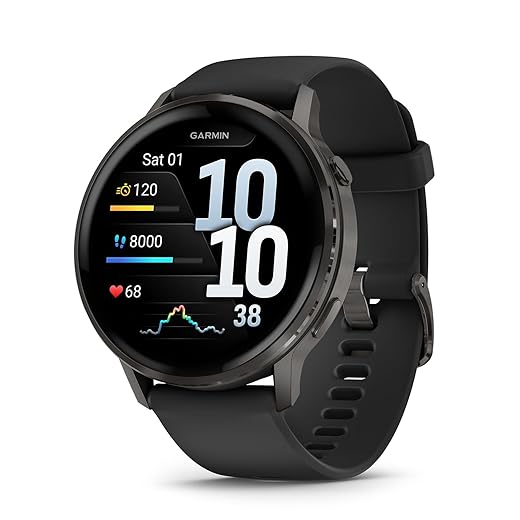
Garmin Venu 4 45mm Fitness Smartwatch
I found its training features and deep metrics extremely useful for serious workouts and recovery monitoring. The AMOLED screen plus long battery life made it a pleasure for both daily wear and extended training blocks, though there’s a learning curve to unlock everything.
Performance and training tools
I rely on the Venu 4 when I want detailed training feedback — it delivers a huge range of sports modes, guided workouts and metrics like training load, fitness age and recovery. For serious training cycles it helped me structure sessions and monitor progress.
Display, battery and everyday use
The AMOLED screen is crisp and the watch balances style with functionality. I routinely got many days of use between charges, and the built‑in flashlight is one of those surprisingly handy extras during early morning runs.
Who should consider it
If you want a powerful fitness device that also looks good all day, the Venu 4 is a top contender. Expect a bit of setup time to get familiar with menus and metrics, and be prepared that some advanced features may be region‑restricted. For athletes and data‑minded users, the payoff is substantial.
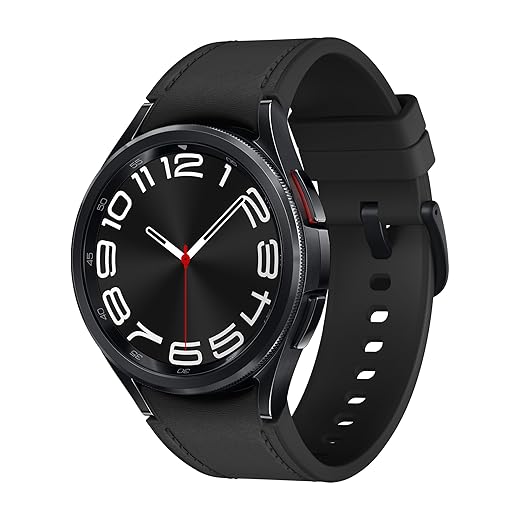
Samsung Galaxy Watch6 Classic 43mm LTE
I liked the stainless‑steel build and tactile control — the rotating bezel remains one of my favorite interactions. Health sensors (including ECG and temperature) and NFC payments make it a strong everyday Android companion, though battery life can feel average under heavy use.
Design and controls
The Galaxy Watch6 Classic brings a familiar, refined aesthetic with a rotating bezel that I still find intuitive and satisfying to use. The stainless steel case reads premium on the wrist and the 43mm size strikes a good balance for many people.
Health, connectivity and daily use
The watch offers ECG, temperature sensing, GPS, NFC payments and LTE in some configurations, which I used for hands‑free moments and quick contactless purchases. The health sensors gave me consistent readings during workouts and sleep tracking.
Things to consider
If you need long battery life during multi‑day trips, factor in that continuous GPS or LTE will shorten runtime. Renewed units may lack original boxes or chargers, so verify seller details. For Android users who value build quality and classic controls, this is an excellent mid‑to‑high tier option.
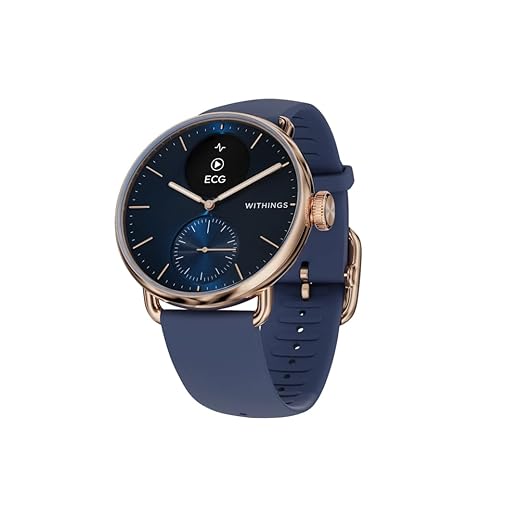
Withings ScanWatch 2 Hybrid ECG Smartwatch
I enjoyed the hybrid look — analog hands with medical‑grade ECG and long battery makes it stand out for all‑day wear and sleep monitoring. The approach is discreet and elegant, but you should expect fewer smart features than fully digital watches.
Elegant hybrid design
I liked that the ScanWatch 2 blends an analog watch face with clinical-grade health monitoring — it looks like a traditional watch but captures medical‑oriented data such as a 30‑second ECG. The sapphire glass and steel case make it feel durable and refined.
Health focus and battery advantage
The standout for me was the multi‑week battery life; wearing it continuously for sleep and activity tracking without frequent charging is a real convenience. The ECG, continuous heart rate and SpO2 monitoring gave me confidence for trend tracking over time.
Trade‑offs and real‑world use
Because it’s a hybrid, the ScanWatch 2 doesn’t compete with full smartwatch platforms in app variety or on‑wrist interactivity. Notifications are basic and the small screen limits content. For someone who prioritizes discreet, clinically oriented health monitoring and battery longevity over smart apps, it’s a compelling option.
HUAWEI WATCH FIT 4 Pro Titanium
I loved how light and comfortable it felt — the screen is exceptionally bright and the hardware feels premium for the price. Health sensors (ECG, SpO2) and long battery life made it great for daily wear, though the companion app can be noisy and occasionally intrusive.
Display and build quality
I was impressed with the big 1.82" sapphire AMOLED screen and the lightweight construction — it’s one of the most comfortable premium‑feeling watches I tested. The titanium bezel and sapphire glass give real durability without bulk.
Health tracking and battery
ECG collection felt responsive and I found heart rate and SpO2 readings consistent in everyday use. Battery life is solid for a bright display and the 10‑day claim held up under light‑to‑moderate use.
Practical notes and ecosystem trade‑offs
My main gripe was the companion app experience — it felt cluttered with promotions and in‑app offers that distracted from the health reports. If you’re already invested in Google’s or Apple’s ecosystems you may miss deeper app integrations. Still, as a hardware package offering strong sensors and comfortable wear for the price, it’s excellent value if you can tolerate the app experience.
Fitbit Sense 2 Health‑Focused Smartwatch
I appreciate how the watch prioritizes wellbeing: stress detection, sleep profiling and ECG features are thoughtfully presented. The battery life and comfort make it easy to wear around the clock, though it isn’t as feature‑rich as full smartwatches in the app ecosystem.
Wellness‑first approach
I liked how the Sense 2 focuses squarely on health: heart metrics, sleep staging, skin temperature and stress monitoring felt useful rather than gimmicky. It's a watch designed for someone who wants a clear picture of their wellbeing without the complexity of a phone‑like wrist OS.
Battery life and daily usability
Getting nearly a week between charges was refreshing — I could wear it to bed and keep continuous sleep and stress tracking without worry. The built‑in GPS worked well for outdoor walks and runs when I enabled it.
Limitations and who it suits
If you want a rich third‑party app library, music controls or deep on‑wrist apps, this watch isn’t aimed at that audience. Also, some of the more detailed analytics live behind Fitbit Premium. For someone prioritizing sleep, stress and reliable health metrics with minimal fuss, it’s a very practical choice.
Final Thoughts
If you want the clearest, most actionable ECG experience and you use an iPhone, I recommend the Apple Watch Series 9 45mm Stainless Steel. Its ECG readings, seamless Health app integration, and fast S9 chip make it the easiest way to track rhythms, share results with your doctor, and get alerts like fall detection and irregular rhythm notifications.
If you prefer discretion, long battery life, and a watch that feels more like a classic timepiece while still offering medical-grade ECG, go with the Withings ScanWatch 2 Hybrid. It won’t replace a full-featured smartwatch, but it excels at sleep tracking, multi-day battery, and quiet health monitoring — great for people who want clinical-style data without constant charging or flashy notifications.
FAQ
No. I treat smartwatch ECGs as a powerful screening tool. They can spot irregular rhythms (like possible AFib) and help you capture events to show your doctor, but they don’t replace a 12-lead clinical ECG or professional diagnosis.
In my tests, high-end models (Apple, Withings, Samsung) gave consistent rhythm traces for single-lead ECGs. They’re surprisingly reliable for spotting rhythm issues, but accuracy depends on good skin contact, minimal movement, and following on-screen instructions.
Not really. A single ECG recording is short and uses little power. What drains battery is continuous health monitoring, always-on displays, GPS, and heavy notification use. If battery life matters, pick a hybrid like Withings or a long-runner like Garmin/Venu.
I always check compatibility first. Apple Watches only pair with iPhones. Samsung and Fitbit work with Android and iOS, but some health features (and seamless app experiences) are best on Android for Samsung. Withings and HUAWEI generally support both, though HUAWEI’s app can be clunkier on iOS.
No — and I won’t sugarcoat it. Smartwatch ECGs are designed to detect rhythm irregularities, not heart attacks. If you have chest pain, shortness of breath, or other warning signs, seek emergency care immediately.
I take one when I feel odd (palpitations, dizziness) and one or two as routine checks if I’m monitoring a condition. Daily automatic checks can be useful, but excessive self-testing creates noise. Use recordings to track trends or to show to your clinician.
Many ECG features in major watches are cleared or certified regionally (for example, Apple and Withings have sought regulatory clearance). I still recommend treating them as complementary tools and confirming any concerning results with a healthcare professional.

Samsung Watch6 Classic looks classier than most Android watches. I like the rotating bezel idea — is it as satisfying in daily use as it sounds?
Totally. Feels more like a traditional watch. Also easier to use while running or with gloves.
The rotating bezel is one of my favorite interactions — tactile and precise. It adds a premium feel to the Watch6 Classic and is great for quick navigation without smudging the screen.
Bought the Garmin Venu 4 based on this article. Battery and training features are great but be ready to miss the polish of an Apple Watch if you switch from iOS. Also the AMOLED screen is gorgeous in person.
Ivy — it’s improving, but not as many apps as Wear OS or Apple. Most people I know use Garmin’s built-in features instead.
Thanks for the follow-up, Julian. That’s a common tradeoff: raw features vs polish. Glad it’s working well for you.
How’s the third-party app support? I use a couple of niche fitness apps and was curious.
Anyone tried the Huawei Watch Fit 4 Pro? The price point and 10-day battery sound insane, but I’m worried about app compatibility with iPhone. Thoughts?
The Fit 4 Pro is great hardware-wise — lightweight and bright screen. On iPhone, core features (ECG, activity tracking) work, but the Huawei app can be clunkier and you might miss some tight OS-level integrations. If seamless iPhone sync is your top priority, Apple Watch is still the safest bet.
If you want perfect app sync on iPhone, skip Huawei. If battery and price matter more, go for it.
I use it with an iPhone. It works for basics, but I had to accept some quirks in the app. Battery is the main reason I keep it.
Also, check whether the Amazon listing mentions full iOS compatibility. Sometimes features are limited by region.
Small rant: the renewed Apple Watch Ultra 2 price on Amazon was almost the same as new during a recent sale 🤦♀️ Why bother with renewed then? Anyone seen big price swings?
Also consider seller rating and included accessories. Renewed may save money, but sometimes you’ll get better warranty with a new one.
Yep, sales around holidays or Prime Day can make brand-new units very tempting. I snagged a new Venu on a flash sale last year.
Pricing can fluctuate a lot on Amazon. Renewed can be a good deal sometimes, but watch for sales — new units sometimes match or beat renewed prices. Patience helps.
Quick nitpick: The Fitbit Sense 2 was labeled ‘best for stress, sleep and wellness’ — true! I love the sleep scores. But I found the ECG feature a little fiddly compared to Apple. Still, comfy for 24/7 wear.
Anyone else feel the Sense 2 gives better mental health insights than most?
I liked the mindfulness bits too. Battery for Sense 2 is decent compared to full smartwatches.
Agree — Sense 2 shines at stress and sleep insights. ECG is functional but not as integrated as Apple’s. Fitbit’s mindfulness and stress tools are strong if you’re focused on overall wellbeing.
Yes, the stress tracking nudges actually made me start short breathing exercises. Small features can add up.
Tiny PSA: if you have an older phone, double-check compatibility before buying anything. Friend bought a Galaxy Watch6 and her Android version was too old for some features. 🙃
Yes! I almost bought an LTE model only to find out my carrier wouldn’t activate it.
Also check carrier support for LTE models. Not all carriers support eSIMs the same way.
And region locks! Some features are region-specific (ECG approvals, NFC payments).
Good reminder, Margo. I included compatibility notes in the roundup — always check minimum OS requirements on the Amazon listing.
The Ultra 2 looks tempting for weekend hikes. Does the LTE actually come in handy for safety (like SOS, maps) when you leave your phone at home?
Used LTE on a hike once when my phone died — lifesaver. Just bring a power bank for the watch if you’ll use LTE a lot.
Yes — LTE on the Ultra 2 can be very useful for safety: you can send SOS, make calls, and use maps without your phone. Battery will drain faster with LTE enabled, so plan accordingly on long outings.
Funny thought — what if my ECG shows something weird and I panic? 😂
Serious question though: how reliable are wrist ECGs across these models? Should any odd reading prompt a doc visit?
Short answer: wrist ECGs are useful screening tools but not diagnostic on their own. They can detect irregular rhythms like AFib with decent accuracy, but any concerning or persistent abnormal results should be followed up with a healthcare professional.
Agreed. Use the watches for monitoring and trend spotting, not as a final diagnosis.
If you get a one-off odd reading, don’t freak out immediately, but do repeat it and track symptoms. If it recurs, see a doc.
I’m torn between the Garmin Venu 4 and the Samsung Watch6. Mostly for triathlon training and daily metrics. Which one gives better GPS accuracy and training metrics?
For pure training and metrics, I favored the Garmin Venu 4 — deeper training features and longer battery. Samsung is solid too, especially if you want a more polished smartwatch experience, but Garmin wins on advanced sports metrics.
Garmin all the way for triathlon. The training load/recovery stuff is way better. Galaxy is nicer for notifications and Samsung Pay though.
I appreciated the expert ratings — helped me decide between Fitbit Sense 2 and Withings. Ended up with the Withings for the battery/sleek look. The tradeoff in smart features is fine for me but some friends missed the richer app ecosystem.
Also, someone should invent a smartwatch that charges itself from sunlight. 1 day or 30 days, why not both? 😄
Glad the ratings helped, Caroline. Solar charging would be a dream — some GPS watches have solar variants but not widely available across these ECG-focused models yet.
Haha solar charging would be lit. For now, I rotate between a hybrid and a Garmin so I don’t worry about daily charging.
I like that approach — hybrid for day-to-day, sport watch for training.
To anyone juggling battery life and features: Garmin Venu 4 seems like the best compromise in this list. 12 days is wild for a GPS watch. The learning curve is real though — be prepared to spend an afternoon exploring settings.
Seconding the learning curve. But once you set up watch faces and data screens, it’s glorious.
Also check the training plans and recovery metrics — they are worth the initial time investment.
Garmin routes and breadcrumb navigation = clutch for long rides. Just saying.
Yep — Garmin is a great balance for that use case. If you love data and long battery life, it’s tough to beat.
Long post incoming because I had a lot of questions before I bought mine 😅
I decided on the Withings ScanWatch 2 after reading this. I wanted something discrete that I could wear to work and still get decent ECG/SPO2 data without looking like a smartwatch geek. The battery life is UNREAL — I went two weeks before charging. However, the companion app felt a little sparse compared to full smartwatches. Does anyone else miss having full app notifications on a hybrid? It’s a tradeoff I accepted but curious how others feel.
Also — does the ScanWatch 2 record continuous heart rate during workouts, or is it intermittent?
I love the ScanWatch for day-to-day and sleep. For heavy gym sessions I strap on my old Garmin; happy to have both. Your point about notifications is spot on — you won’t get a ton of smart features.
Also worth noting: Withings updates the app occasionally with new features. If you want to keep the hybrid look but get some more insight, check the Withings Health Mate app settings for more granular data.
Great question, Noah. The ScanWatch 2 prioritizes battery and discrete tracking, so it doesn’t offer the same always-on continuous HR sampling during intense workouts as some sport-focused watches. It does provide reliable spot checks and ECGs, and sleep/respiratory tracking is excellent. If constant workout HR is a must, a Garmin or Apple Watch would be better.
Noted — thanks for the detailed breakdown, Noah. Very helpful for those of us in office jobs who want something low key.
I have it too — battery and sleep tracking are amazing. But yeah, don’t expect live HR graphs during a run.
Really enjoyed the roundup — helped me narrow down choices. I’m an iPhone user so the Series 9 makes sense, but the renewed listing on Amazon has me a bit wary. Anyone had luck with renewed Apple Watches lasting long-term?
If you’re buying renewed, try to pick Amazon Renewed or a reputable third-party seller. Also ask about battery health if possible.
I bought a renewed Series 6 last year and it’s been fine. Seller had a 90-day warranty. No battery drama so far, but ymmv.
Thanks, Maya — glad it helped! Renewed units can be a great value. I tested a renewed Series 9 in this roundup and it behaved like new during my time with it, but always check the seller’s warranty and return policy on Amazon.