
Why I Investigate Bluetooth Battery Telemetry in Tools
I introduce my motivation and the scope of this article: decoding on-tool Bluetooth battery telemetry and smart-battery communication in power tools. I explain why this topic matters now, its rising interest, and the low estimated search competition that makes practical exploration rewarding.
You will learn basic concepts, common protocols, reverse-engineering techniques, and practical capture workflows. Examples come from everyday tool ecosystems and use a hands-on investigative approach without relying on vendor secrets. I aim to equip you to experiment responsibly and safely. I include tips for tools, capture hardware, software, and legal best practices. Follow along and build skills today.

Fundamentals of Smart Batteries and On-Tool Telemetry
Architecture: what’s inside a “smart” pack
I start by thinking of a smart battery as a small system, not just cells in shrinkwrap. Typical building blocks are:
I’ve opened DeWalt and Milwaukee packs to confirm you often find a small PCB with an MCU and a fuel‑gauge IC under the wrapper.
Typical telemetry points (what you can hope to read)
Common items you’ll see exposed by fuel gauges or the pack controller:
Why tools and packs exchange data
Manufacturers share telemetry for safety, runtime estimation, cell balancing, and performance tuning—e.g., a brushless motor controller shaving current when a pack reports high internal resistance. In practice, telemetry lets the tool limit power during thermal events and enables accurate charge displays.
Design choices that affect availability
Key choices determine what you can tap into: integrated vs. external fuel gauges, whether internal buses are SMBus/I²C/HDQ or proprietary, and whether Bluetooth is added in‑pack or via the tool. For hands‑on work, I look for test pads, connector pinouts, and FCC filings for Bluetooth modules—these are fast wins.
Next I’ll dive into the comm layers you’ll encounter, starting with BLE and the other on‑tool channels that carry this telemetry.
Bluetooth Low Energy and Other Communication Layers Used by Tools
BLE fundamentals that matter for telemetry
When I inspect a pack or tool I first treat BLE as two ways of getting data: broadcast (advertisements) and connected (GATT). Advertisements can carry short summary fields—SoC, a fault flag, or a short ID—without pairing. Connected mode exposes GATT services and characteristics: standard Battery Service or vendor UUIDs that map to voltage, temperature, current, and counters. Notifications (server → client) push live updates; reads/writes access configuration or logs.
Practical tips I use:
How vendors map metrics into GATT
Manufacturers commonly map raw fuel‑gauge outputs into characteristics:
Other wireless and wired layers
Beyond BLE you’ll encounter:
A quick hardware tip: trace PCB pins from the pack connector; if a fuel‑gauge IC is present, SMBus is likely available on exposed pads.
Encryption, pairing and obfuscation to expect
Expect a spectrum: open advertisements, paired-but-clear GATT, and fully encrypted services using BLE Secure Connections or vendor keys. Vendors also use simple obfuscation—XOR, CRCs, rolling counters—rather than strong crypto. My approach is incremental: capture broadcasts first, connect and read public characteristics, and only then investigate encrypted payloads using firmware dumps or FCC/module datasheets.
Next, I’ll explain the tools and setup I use to capture that BLE traffic reliably.
Preparing to Capture: Hardware and Software Tools I Use
Core radio sniffers and SDRs
For BLE I favor purpose-built sniffers and a few SDRs for spectrum work. My go‑to list:
Wired probing and electrical measurement
When a tool exposes SMBus/I²C or a USB interface, I capture both protocol and power measurements:
Hands‑on debug and software stack
My software toolbox combines standard stacks with reverse‑engineering tools:
Test rig, environment and safety tips
I build repeatable rigs: isolate the DUT with RF absorbers if needed, use consistent mechanical loads (a drill press for rotary tools), and log timestamps on both wireless and wired traces. Practical rules I learned:
Next up, I’ll walk through a live capture session and show how these tools come together to reveal telemetry packets.
Capturing and Interpreting BLE Traffic from a Tool
Discover and fingerprint
I start with broad discovery: scan for advertisements to capture device names, MACs, and service UUIDs. A simple nRF Connect scan will show intermittent manufacturer packets; note advertising intervals and payload lengths. I record timestamps and DUT state (idle, under load, charging).

Passive sniffing vs active connection
Map GATT services and characteristics
I systematically read service UUIDs and characteristic properties (Read/Notify/Write). I rename discovered UUIDs in Wireshark and log which char handles emit data when the tool state changes (spin up motor, apply load, charge).
Collect notification streams under real load
I run the tool through repeatable steps—idle, controlled load, full discharge—while logging:
Finding fields, scaling and CRCs
To extract structure I:
Handling encryption, obfuscation and rate limits
If the link is encrypted, I try to capture pairing exchange or test with an unpaired debug unit; otherwise I fall back to advertisement analysis or firmware extraction. For rate‑limited adverts I extend scan windows, use directional antenna placement, or move to an active subscription to get higher-rate notifications.
Next I’ll describe how I turn those coerced fields into a formal protocol map and validate them against firmware and datasheets.
Reverse‑Engineering Smart-Battery Protocols and Data Formats
Identify numeric types and scaling
I start by asking whether a field is signed/unsigned, integer or fixed‑point. My first test: induce a known, small change (e.g., drain 0.1–0.5V) and watch which bytes change and by how much. If a 16‑bit little‑endian word moves from 0x0EC4 to 0x0E74 when voltage drops 0.1V, that suggests centivolts or millivolts scaling (3780 → 3692 → divide by 100/1000 to get volts). Currents frequently use signed two’s‑complement; temperatures often use offset + fixed‑scale.
Recognize flags, bitfields and multi‑field records
I scan for bytes that flip on discrete events (charging, motor spin, fault). Bitwise OR’ing and XOR’ing consecutive captures often isolates status bits. Multi‑field records (voltage + current + SOC) typically change in correlated ways; streaming samples usually show steady per-sample structure. I annotate suspected bit positions and test them by toggling the condition (start/stop motor, plug/unplug charger).
Use controlled experiments and differential captures
Controlled variation is my most powerful tool. I run sequences like:
These differential captures reveal which bytes encode magnitude vs state.
Statistical and automation aids
I automate analysis with quick Python scripts (pandas, numpy) to compute byte-wise correlations, histograms, and candidate scalings. Pattern clustering often separates telemetry from counters or CRCs.
Validate by replaying or synthesis (safely)
When feasible I synthesize writes or notifications (BlueZ/gatttool, bleak) to confirm interpretations—but only on isolated bench rigs or emulated batteries to avoid unsafe actuator commands.
Common pitfalls I avoid
Applications, Limitations, and Responsible Practices
Practical applications I build toward
I use decoded telemetry for several concrete projects: third‑party monitoring apps that show live state-of-charge, runtime estimation and per‑job battery consumption; predictive maintenance models that flag batteries losing capacity or cells drifting; custom dashboards (Grafana) that aggregate multiple tools on a jobsite; and simple IoT integrations that trigger alerts when a critical battery drops below a threshold. For example, I’ve aggregated M18-style battery logs (via their BLE adaptor in the field) into a dashboard that cut unscheduled downtime by spotting weak packs early.
Key limitations to expect
Responsible disclosure and safety practices
I always prioritize safety and vendor coordination. Steps I follow:
Checklist: safe, repeatable workflow
With those guardrails in place, decoded telemetry becomes a powerful, practical tool — and I bring that mindset into the article’s concluding takeaways.
Concluding Practical Takeaways
I’ve shown that battery telemetry reveals state of charge, health trends, temperature behavior and usage patterns that illuminate tool performance. The practical steps, choosing capture hardware, using BLE sniffers, decoding GATT and proprietary payloads, and validating with measurements, let you extract actionable insights without guessing.
Proceed with technical curiosity balanced by responsible practices: respect warranties, privacy and local law, and disclose findings constructively to vendors. If you implement monitoring, validate with voltmeters and cycle tests, document formats, and share anonymized results to help the community. Start small, iterate, and contribute what you learn. Join the conversation online.

Nice walkthrough. Quick practical q: when you log current draw while the drill is under load, what’s your preferred sampling interval? I’m worried the Handheld Digital Multimeter with Backlit LCD Display I have won’t be fast enough.
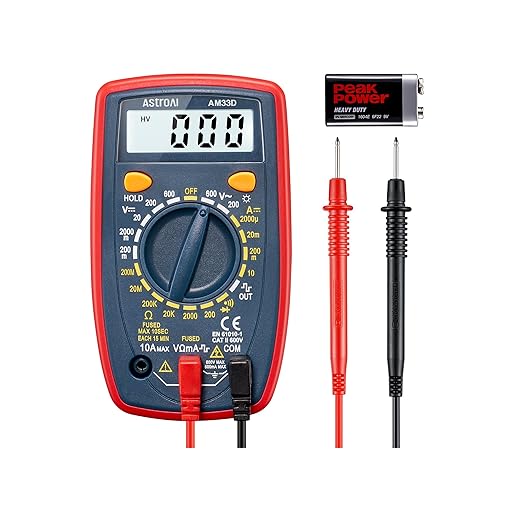
Also consider the AstroAI Digital Multimeter with Backlit Display for slightly better sampling in some models — check the specs.
For general runtime curves I use 1 Hz sampling; for transient spikes I go up to 100 Hz if the DMM supports it (or use a bench DMM/oscilloscope). Many handhelds top out low, so for high-res transients consider a logging DMM or DAQ.
If you only have the Handheld DMM, try capturing multiple runs and averaging — crude but sometimes good enough.
Loved the step-by-step on capturing BLE packets — super practical. Quick question: when you used the TP-Link UB5A Nano USB Bluetooth 5.3 Adapter, did you run into driver issues on Linux (Ubuntu 22.04)?
Also — do you recommend any particular settings in Wireshark for filtering tool telemetry vs noise? I tried a blanket BLE filter and got swamped with advertising packets. 😅
Good question — on Ubuntu I had to install the Blueman stack and enable experimental features for the chipset, but newer kernels handle the UB5A much better. For Wireshark use “btatt || btle” plus the tool’s MAC (if known) to reduce noise. Also enable “Follow Bluetooth Low Energy” when you see an ATT connection.
If you don’t want to mess with drivers, consider using a dedicated sniffer for a bit — saves time if you have lots of captures to do.
I had issues on Fedora until I blacklisted the default BT driver and used the vendor firmware from TP-Link. Painful but worked.
This article was the perfect blend of nerdy and practical.
I shared it with my maker group and we attempted a capture night. Fun chaos ensued. A few takeaways from our session:
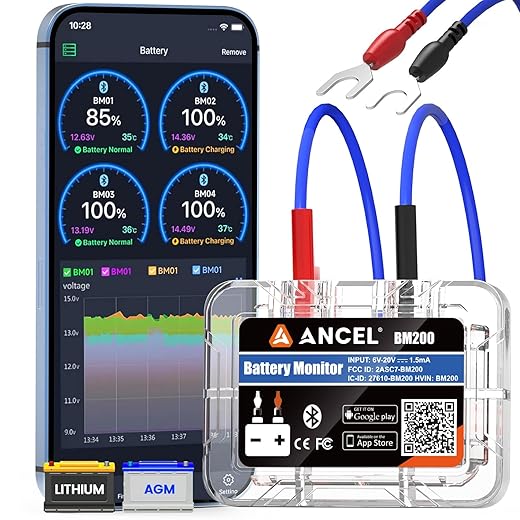
– The ANCEL BM200Blue Bluetooth 12V Battery Monitor paired easily with my phone but refused a sniffer’s passive reads until bonded.
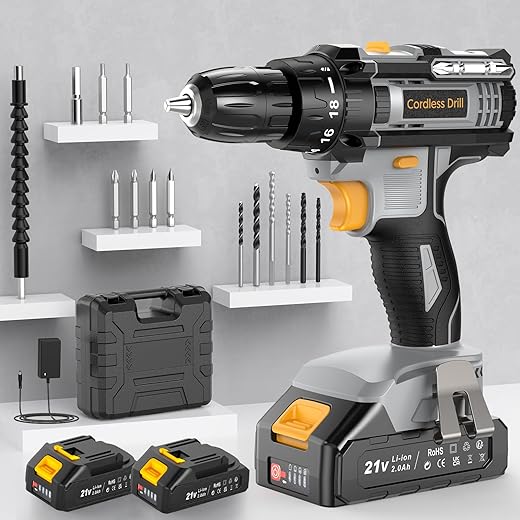
– Some cheap 21V Cordless Combi Drill Kit batteries emitted no helpful advertising data — had to actively connect.
– You’ll want headphones when the shop playlist keeps BLE headphones advertising loudly. 😂
Thanks for the ethical reminder at the end — we set rules before poking at vendors’ devices.
P.S. Minor spelling nit in section 4 but nothing to fret over. 🙂
Omg the BLE quiet box is brilliant — we might steal that idea 😂
Glad the maker night worked out — love that kind of hands-on feedback. Good to hear about the ANCEL behavior; bonding is surprisingly common.
Please do — group etiquette and safety rules are super useful.
Story of my life: headphones ruin captures. We now have a ‘BLE quiet box’ — hilarious but effective.
If folks want, I can add a short checklist for ‘group capture nights’ in the next revision.
Solid article. I appreciate the hardware list — I already had a Handheld Digital Multimeter with Backlit LCD Display and a TP-Link UB5A, so that saved me some shopping.
Two questions:
1) When you say “sniff BLE traffic,” are you always using passive sniffing, or do you ever actively connect to the battery to elicit telemetry?
2) Any tips for getting decently-clean captures in a crowded workshop (lots of BLE beacons from phones)?
Thanks — didn’t realize you could manually lock channels. Will try that.
Also try setting the sniffer to a specific channel (37/38/39 or data channels) depending on where the piconet is. Cuts down interference.
Good questions. I use passive sniffing for discovery, then active connections when needed to trigger characteristic reads/notifications (careful with write commands). For crowded environments: move the tool and sniffer away from other devices, use directional antennas if possible, and capture multiple short sessions — then merge and compare.
Channel locking can help but watch for frequency hopping — some connections will still hop away from your locked channel if you take too long to start sniffing.
Good write-up but I felt the BLE version differences section was a bit brief. Not all USB adapters handle Bluetooth 5.x features equally. Did you test the TP-Link UB5A for LE long range or isochronous channels? If not, say so — don’t imply full 5.3 support if it’s just basic LE.
Fair point. I tested basic BLE 5.3 features relevant to scanning and connections for captures (advertising sets, extended advertising). I did not test LE long range or isochronous channels in the article — I can add a clarification. The UB5A works for most captures but isn’t guaranteed for advanced 5.3-only features.
This is the kind of rabbit hole I fall into on weekends. Nice write-up, though — made me feel less guilty about reverse-engineering batteries 😂
One worry: any legal red flags? If I decode a tool’s telemetry for my own 21V Cordless Combi Drill Kit at home, is that fine?
Short answer: usually OK for personal experimentation, but distribution or publishing proprietary protocol specs can get you into legal trouble. I highlight ‘Responsible Practices’ in the article — always check EULAs and avoid sharing manufacturer’s private keys or copyrighted docs.
This was super helpful and actually funny in parts 😂 — loved the ‘responsible practices’ call-out.
I tried the steps with an AstroAI Digital Multimeter with Backlit Display and a cheap oscilloscope. Ended up discovering a weird sleep-wake pattern where the tool polled every ~7s when unused. Anyone else see such periodic telemetry?
I saw that with a different drill — the interval changed under low battery conditions (more frequent updates).
Yes, many smart batteries send periodic heartbeats when idle to report state-of-charge and health. ~5–10s is common to balance freshness and power use.
Fun read. I especially liked the reverse-engineering section — the heuristics for identifying fields in battery packets were golden.
That said, I’m curious: did you ever run into encrypted GATT characteristics that refused to reveal values unless bonded? I ran into that with an ANCEL BM200Blue clone and it was maddening. Also, tiny typo in the ‘Preparing to Capture’ table (missing unit for sample rate) — but overall excellent work.
P.S. Someone should make a GUI that stitches DMM logs and BLE captures into one timeline. I’d pay for that. 🙂
Yes — some batteries require pairing/bonding and encryption. In those cases I documented strategies: attempt to pair, capture pairing handshake, and if keys are ephemeral you may be blocked. Respect device rules — don’t brute force keys. Also thanks for the sample-rate note — will correct it.
Good tip, I’ll check Sigrok. Thanks!
If anyone’s interested I can share a small Python script I use to align timestamps between Wireshark PCAPs and CSV logs from the DMM.
I’d love that script — saves me from reinventing the wheel.
About the GUI idea: open-source tools like Sigrok + custom scripts can do timeline stitching if you export CSVs. Not as polished as a single app, but doable.
This was super detailed — thanks!
I followed the sections on multimeters and bought an AstroAI Digital Multimeter with Backlit Display to check voltage rails while I sniffed BLE. The instructions on correlating timestamps between the DMM and capture file were especially helpful.
A couple of typos I noticed, but nothing that blocked following the steps. Also, the ANCEL BM200Blue Bluetooth 12V Battery Monitor looks neat — anyone tried pairing it with a drill battery just to read idle voltage? 🤔
Practical and to the point. I like the ‘Concluding Practical Takeaways’ section — convinced me to test the 21V Cordless Combi Drill Kit’s battery to see if I can get runtime curves.
One small nit: screenshots of the TP-Link setup would help newbies. Otherwise great job!
Agree on the screenshots. Even a short screencap of pairing sequence would save a bunch of questions.
Thanks — noted on more TP-Link screenshots for a future update. The drill kit is a good example because the battery telemetry is simple but informative.
Very detailed reverse-engineering notes — thanks.
Two technicals:
– How do you distinguish big-endian vs little-endian fields when you’re only seeing raw byte streams? Any heuristics you use beyond trial parsing?
– When mapping battery SOC to raw ADC counts, did you calibrate using the Handheld Digital Multimeter with Backlit LCD Display or an actual lab supply?
Endian heuristics: look for known constants (e.g., 100% = 0x64) or timestamp-like values; try both endians and see which yields plausible ranges. Also inspect repeated patterns across packets. For SOC calibration I used the DMM plus a calibrated bench supply for a couple spot checks — DMM is fine for relative mapping, supply helps confirm absolute voltages.
Also check for CRC fields — they often give away byte order if CRC matches only one interpretation.
Nice guide. I used a TP-Link UB5A Nano USB Bluetooth 5.3 Adapter and a cheap recorder to log audio cues while I tested battery drains. Worked well. —C