
We shoved them through mud, rain, and airport conveyor belts to see which bag actually makes us travel lighter — and look cooler doing it.
We set two beloved camera backpacks in the ring to see which one survives our chaotic shoots—style, smarts, and spilled coffee included. We test design, storage, comfort, and value to judge which protects our gear, eases our backs, and earns a spot on every shoot.
Everyday Carry
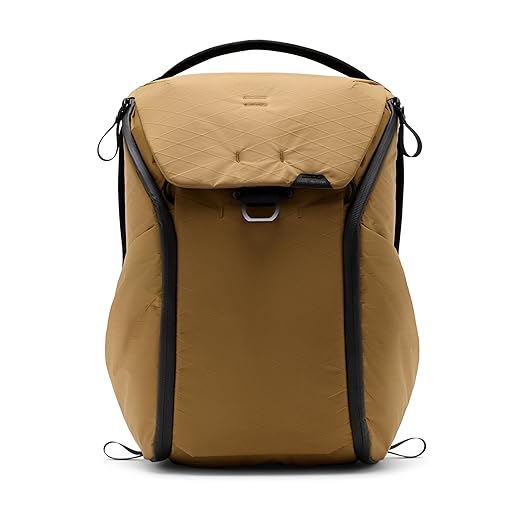
We like how the pack blends everyday style with camera-ready functionality; its access and organization are a joy to use. That said, when fully loaded it leans toward commuter use rather than all-day pro field comfort.
Field Ready
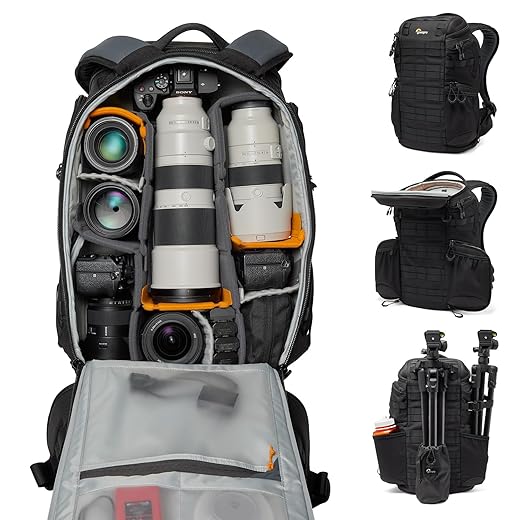
We appreciate the bootcamp-ready build and pro-level access — getting kit in and out is delightfully quick. It’s clearly biased toward field photographers who need capacity and modularity rather than a minimalist commuter vibe.
Peak 20L Backpack
Lowepro BP450 Backpack
Peak 20L Backpack
Lowepro BP450 Backpack
Peak 20L Backpack
Lowepro BP450 Backpack
Design & Build: Which Backpack Can Take the Punches?
Peak Design — Sleek, clever, and surprisingly tough
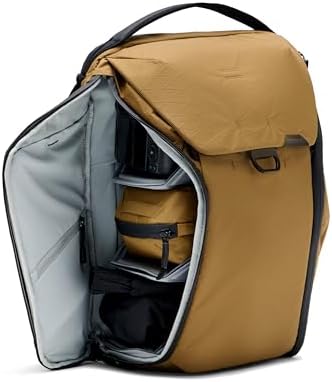
We love how the Everyday Backpack looks like it walked off a Scandinavian design set: clean lines, minimalist branding, and thoughtful hardware (hello MagLatch and UltraZips). The 400D recycled weatherproof shell resists drizzle and grime, and the zipper channels keep water out better than a basic zipper. Stitching and seams feel premium — they reward careful use rather than abuse — and the MagLatch is delightfully one-handed. If aesthetics and clever closures make you smile, this one will.

Lowepro — Tactical, reinforced, and built to work hard
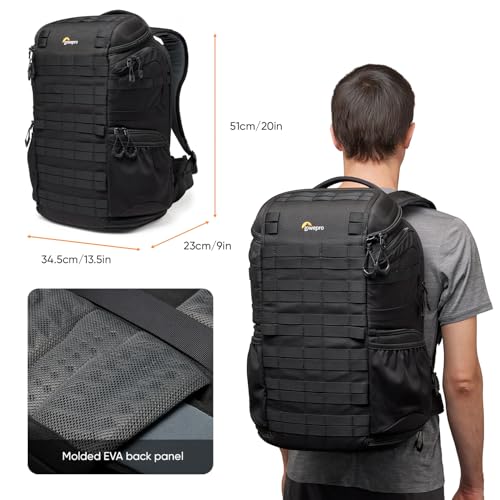
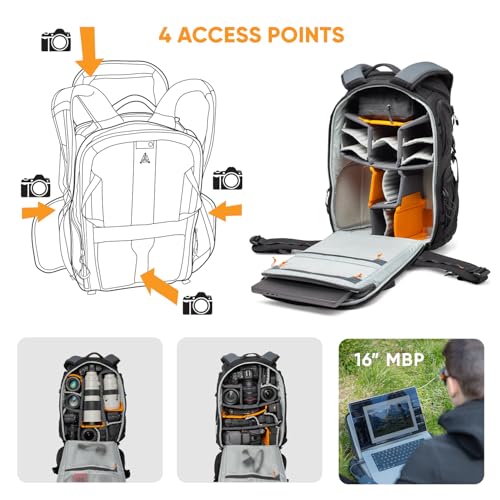
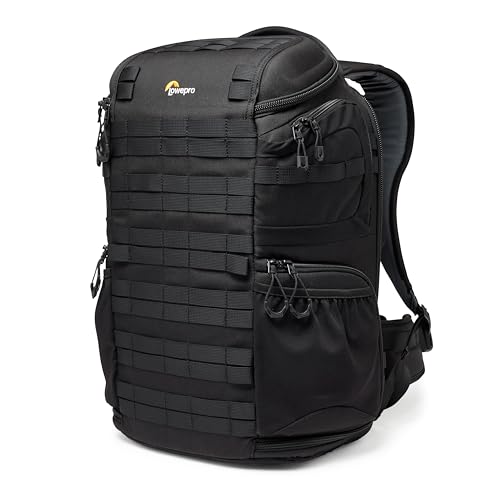
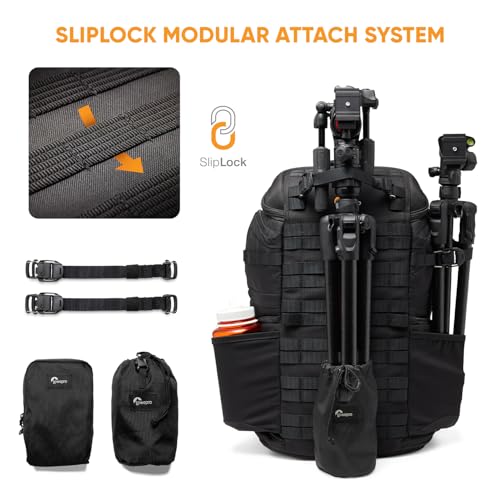
The ProTactic BP 450 AW III wears its intent on its sleeve: rugged outer fabric, reinforced seams, and a semi-rigid internal structure that lets the bag stand up and protect gear. Zippers are heavy-duty and anchored into robust panels; the included All Weather Cover adds an extra level of weather protection for proper storms. External webbing, SlipLock/MOLLE compatibility, and multiple attachment points give you a toolbox of options — it’s the practical, no-nonsense choice when we plan to be in rough conditions.
Small design wins (and the things that made us wince)
Storage & Organization: Where Does Our Gear Live Better?
Peak Design (Everyday 20L / 30L)
We found Peak’s FlexFold system smart and tidy: the 20L is best for a mirrorless body + 2–3 lenses and everyday items, while the 30L swallows a body + 3–4 lenses or a small gimbal and some clothes when we travel light. The dedicated laptop sleeve fits up to a 16″ MacBook tucked behind the camera zone — good for commute-to-shoot workflows.


Lowepro (ProTactic BP 450 AW III, 28L)
The Lowepro’s molded MaxFit dividers feel like tetris-approved armor. In our packing runs it comfortably held a pro DSLR or mirrorless with grip + 4 standard lenses, or a compact folding drone with controller and spare props. The CradleFit laptop sleeve holds up to 16″ laptops and stays separate so gear doesn’t rub your screen.
Fast-grab & practical tips
Comfort & Carrying: Our Backs Tell the Truth
Peak Design Everyday Backpack (20L / 30L)
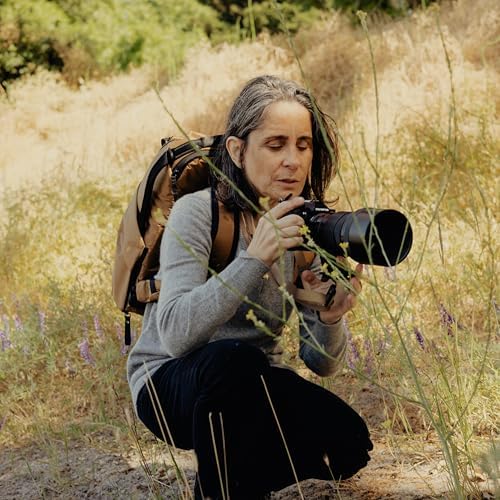
The Everyday has sleek, narrow shoulder straps with tidy padding — comfortable for commutes and quick shoots, but noticeably firmer under heavy loads. Back support is minimalist: a relatively flat rear panel with modest ventilation channels that does fine on a rainy city day but starts to gripe on longer walks. There’s no substantial hip belt to offload weight, so heavy glass sits higher and pulls our shoulders forward after several hours.

Lowepro ProTactic BP 450 AW III
This is the bag that actually asks our backs how they’re doing — and listens. Dual-density ActivZone shoulder straps, a SlideCam sternum strap, and a removable padded waistbelt distribute weight cleanly. The molded EVA back panel with perforations and lumbar structure vents well and keeps the pack stable when we carry a DSLR + big telephoto. It’s heavier overall, but the harness turns long days into “still smiling” days.
How they felt in real use
In short: Peak = sleek commuter comfort; Lowepro = ergonomic endurance.
Value, Durability & Extras: Which Bag Gives More for the Money?
Price vs. what you get
We checked Amazon: Peak Design Everyday ~£250, Lowepro ProTactic BP 450 AW III ~£237. That’s not a huge gap, but what matters is what comes with the cash — Peak sells premium materials and design polish; Lowepro bundles practical pro accessories.
Warranty & support
Peak Design: widely known for a generous lifetime-style warranty on many products and responsive support.
Lowepro: a clear 2-year manufacturer warranty and easily sourced replacement parts (waistbelt, AWC). We like predictable support when gear gets punished.
Long-term durability & resale
Both feel built to last. Peak’s weatherproof 400D shell and premium hardware keep it looking new; Peak often commands stronger resale because of its design cult-following. Lowepro uses robust, recycled fabrics and replaceable components — better for heavy daily abuse and patching up over time.
Extras and ecosystem
We’ll be blunt: if you want out-of-the-box pro utility and repairability (and care more about comfort on long shoots), Lowepro returns more bang per pound. If you prize aesthetics, long-term resale, and Peak’s accessory ecosystem — and don’t mind spending a little extra — the Everyday pays off for commuters and creatives who love configurable style.
Feature Comparison
Final Verdict: Which Bag We’d Pack for Real Shoots
For street shooters and commuters we pick the Peak Design Everyday (20L/30L) — sleeker, faster access and great for mirrorless rigs and daily gear. For travel/documentary we lean Peak Design 30L over the Lowepro for its balance of carry comfort, style, and modular packing. For pros hauling heavy bodies, lenses, or drones the Lowepro ProTactic BP 450 AW III is the clear winner thanks to rugged protection, four-point access and expandability.
For our typical shoots (urban days with occasional client work) we’d grab the Peak Design 20L or 30L; if a big commercial gig or drone job arrives, Lowepro goes in the car. Ready to pack? Bring snacks and spare batteries, always.