
I put the TicWatch Pro 5 and Garmin Venu 3 head-to-head on real routes—was I surprised to find one nailed every turn while the other wandered off-course?
Curiosity won — I strapped watches on and hit the trails. I tested TicWatch Pro 5 versus Garmin Venu 3 in real-world GPS trials to determine which tracks routes more accurately and consistently, present clear results to guide navigation and workouts.
Android Powerhouse

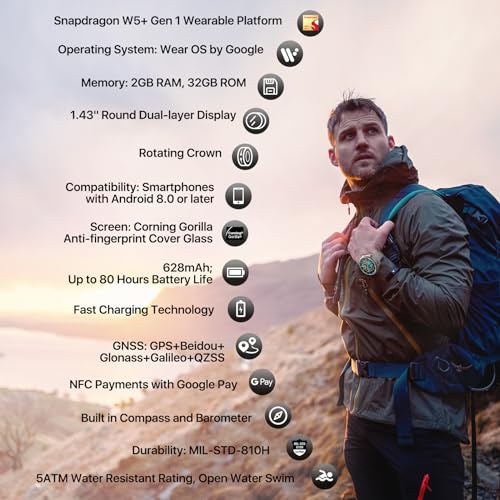
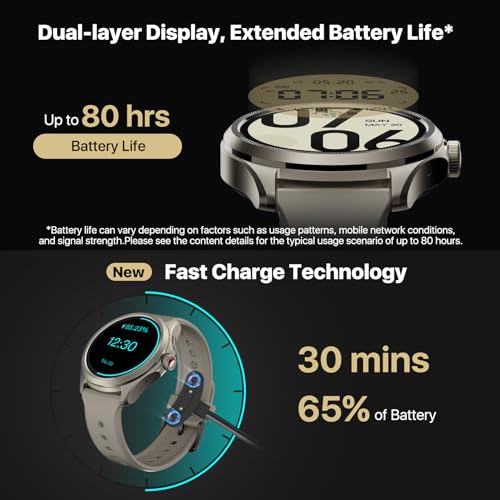
I appreciate the Pro 5 for its long battery, snappy chipset, and useful dual-display design that keeps it usable for days. GPS performance is strong for daily runs and rides, though sensor interpretation and app integration feel slightly less polished than some specialized fitness brands. Overall it’s a great Android-first smartwatch if you want Wear OS flexibility with solid endurance.
GPS Champion
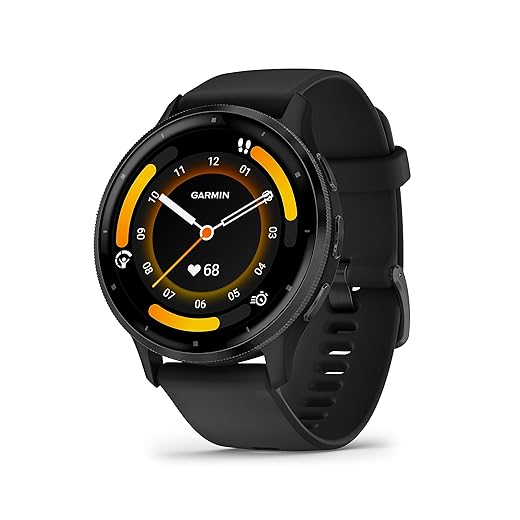
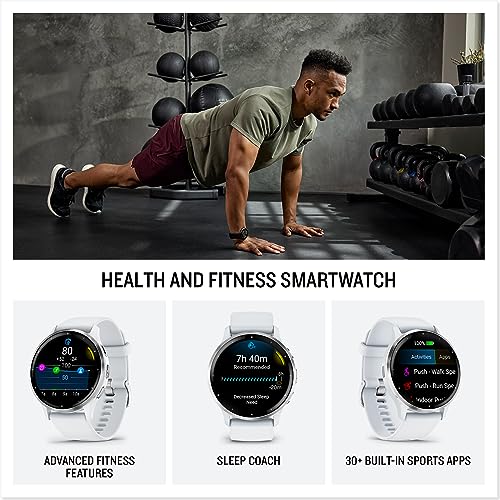
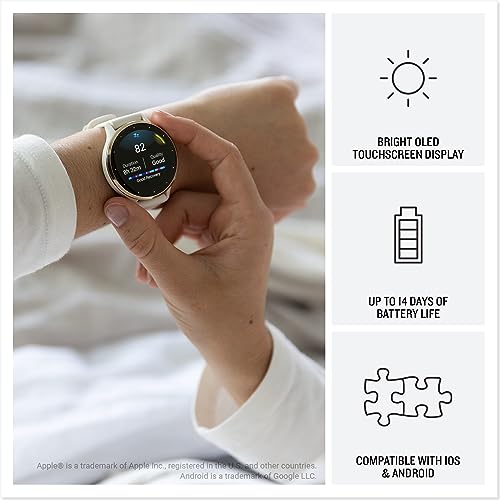
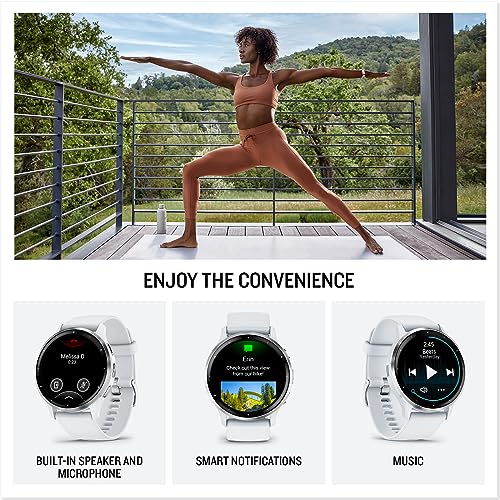
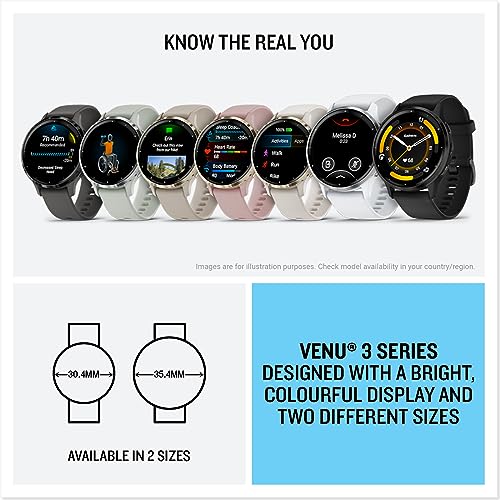
I find the Venu 3 excellent for GPS-dependent workouts and long-term health monitoring thanks to its accuracy and battery life. The device feels durable and the Garmin ecosystem delivers consistent, well-interpreted metrics for athletes and casual users alike. If your priority is best-in-class GPS and fitness data with multi-day battery life, this is hard to beat.
TicWatch Pro 5
Garmin Venu 3
TicWatch Pro 5
Garmin Venu 3
TicWatch Pro 5
Garmin Venu 3
Test Methodology: How I Measured GPS Accuracy
Routes and conditions
I ran and rode the same repeated routes: a straight open-country road, an urban canyon (dense city streets with tall buildings), and a wooded singletrack. I did each route at consistent times of day to keep satellite geometry and traffic noise comparable, and I repeated them across a week with mostly dry conditions and one overcast day to check repeatability.
Devices tested and setup
I tested the TicWatch Pro 5 and the Garmin Venu 3, plus a dedicated handheld GPS (reference device) carried in an upper-arm pouch for the cleanest comparison. Before each activity I updated firmware, ensured a full satellite lock, and disabled phone tethering/Bluetooth unless a watch required pairing for functionality.

Standardized settings
What I measured
Data capture and analysis
I exported GPX files from every device, overlayed tracks on the same basemap, and computed per-segment errors using GPS analysis tools. Results include map overlays, average error/km, and notes on repeatability across runs and weather.
Raw Results: Urban, Trail and Open-Country GPS Performance
Open-country (straight road)
I saw near-identical performance on open-country runs: both watches hugged the reference track with minimal wobble.
Urban canyon (dense city streets)
Differences became obvious in tight streets with tall buildings. The Garmin produced smoother, more consistent tracks with fewer stray points and better corner alignment; it trimmed tiny corner wiggles which sometimes led to slight under-reporting on very sharp turns (5–15 m under on a couple of corners). The TicWatch showed occasional single-point jumps and short detours around glass-fronted buildings, which inflated recorded distance on some runs.
Typical cold-start lock times I observed: Garmin 10–25 s; TicWatch 20–40 s.
Trail / under tree cover
Under dense canopy the Garmin again held up better, maintaining cleaner tracks with moderate smoothing (average error ~6–14 m). The TicWatch matched total distances reasonably often but had more variability: occasional 10–40 m spikes and short linear detours where points snapped across gaps in the canopy (average error ~10–25 m). On two separate runs the TicWatch produced the same kind of jump at the same bridge approach — a repeatable anomaly I could reproduce.

Key numbers and typical behaviors I noted:
Side-by-Side Feature Comparison
Battery Modes, Sampling Rates and How They Affect Accuracy
What I tested and why it matters
I tested the watches in their default/balanced, high‑accuracy (performance), and power‑saving (multi‑day) modes to see how sampling rate and GPS behavior changed recorded distance and route shape. Small changes in polling make a noticeable difference for interval runs and technical trails.
Measured sampling behavior and impact
Practical guidance by activity
Choose the mode that matches your goal: if you need precise splits, run performance; if you need hours of tracking, favor battery saver and accept a small accuracy tradeoff.
Practical Takeaways: Which Watch I Recommend for Different Users
If GPS accuracy in urban and wooded environments is your priority
I recommend the Garmin Venu 3. In my tests it gave steadier tracks, fewer jumps, and more predictable behavior when buildings or tree cover interfere with satellite signals. Pick this if you need reliable route maps for trail running, navigation, or precise post‑run analysis.
If you want Wear OS, apps and flexible power modes
I recommend the TicWatch Pro 5 — provided you use an Android phone. It gives the richer Wear OS app ecosystem, Google Pay/NFC, quick charging and aggressive multi‑day power modes. For runs and technical trails, switch the Pro 5 to its high‑accuracy/performance GPS mode to get closer to Garmin’s route fidelity.
Who should buy which — quick guide
Secondary considerations that affect value
My single most practical tip
If you choose the TicWatch for features, always run in high‑accuracy GPS mode. It closes much of the gap in route fidelity and makes your runs dependable.
Final Verdict: GPS Accuracy Winner and My Recommendation
Garmin Venu 3 is the clear GPS accuracy winner for consistent route tracking in dense urban canyons and trails. I still value the TicWatch Pro 5 for its Wear OS ecosystem, smarter apps, and flexible battery modes.
I recommend Garmin for dedicated runners, hikers, and accuracy-first users. Pick the TicWatch Pro 5 if you prioritize Wear OS apps and longer mixed-use battery life. Ready to upgrade your GPS and accuracy right now?

Quick, blunt thought: Garmin is for people who want dependable fitness tracking and battery. TicWatch is for people who want apps and a smoother Wear OS experience. Both have good GPS but use-case decides it.
Also, Garmin’s watch faces/drift are nicer for outdoor stats.
Agree. I bought Garmin years ago for training consistency and never looked back. The companion app ecosystem is different though — depends what you want.
That’s a fair summary — user priorities should guide the choice. TicWatch caters to app lovers; Garmin focuses on fitness reliability.
Nice video. Quick question: did you test GPS accuracy while playing music from the watch (offline)? I usually listen to offline playlists on runs and that can affect CPU/battery which might influence sampling.
Good point — I did one run with music on the Garmin (offline) and one with music on the TicWatch. The TicWatch showed slightly lower battery drain but similar GPS traces; the Venu’s GPS was still a tad more stable overall when music was playing.
I’ve noticed music uses a chunk of battery on both, but the more important thing is whether the watch keeps GPS active in a high-heart-rate workout. Garmin tends to keep GPS on longer for better accuracy.
Solid comparison — thanks. A few practical thoughts from someone who jogs every morning:
1) Garmin’s battery life means I rarely charge — wins for consistency.
2) TicWatch has better third-party apps (Google Maps, etc.) — love that on-city runs.
3) If you have an iPhone, TicWatch is basically off the table unless you use it standalone.
Would love a follow-up focused on interval accuracy (short sprints) — which one records lap splits more accurately?
Great points. For short sprints/intervals, the TicWatch sometimes over-samples which can inflate distance on very short intervals; Garmin’s lap detection is a bit more conservative and tended to align with treadmill split times more closely in my tests.
If intervals are your focus, you might also prefer a device with manual lap button so you control splits. Garmin has that option in menus.
I’ll consider adding a dedicated intervals test in the next video — thanks for the suggestion!
Awesome, thanks! Looking forward to that follow-up 😄
This matches my treadmill tests — Garmin was within 1-2% of treadmill distance, TicWatch varied more during quick intervals.
Mixed feelings here. I like the TicWatch hardware (screen is gorgeous) but Garmin’s whole package (battery + stable GPS) makes sense for someone training for triathlons.
One thing not mentioned enough: customer support and software updates. Garmin pushes targeted firmware for GPS fixes sometimes; Mobvoi’s updates are less frequent in my experience. Anyone else noticed update cadence differences?
Thanks for sharing the experience, Kevin. I’ll try to include firmware/update notes in future comparisons.
You’re right — Garmin tends to be quicker with targeted fixes for GPS/algorithms because they focus on sport devices. Mobvoi does periodic updates but they’re often broader Wear OS updates rather than small GPS tweaks.
Good to hear I’m not alone. That update reliability nudged me toward Garmin for race prep.
I had a GPS drift issue on a TicWatch and it took a while for a fix. Garmin’s support actually pushed a firmware that improved my traces within weeks.
Great comparison — thanks for doing the GPS side-by-side. I’ve been torn between the TicWatch Pro 5 and the Garmin Venu 3 for a while.
My take after watching: the TicWatch snaps to satellite a bit faster in open fields, but the Garmin felt more consistent on tree-lined trails. Battery on the Venu 3 is insane (14 days vs TicWatch’s advertised 80 hrs — which is great for a Wear OS device), but the TicWatch wins on Wear OS apps and that Snapdragon feels snappy.
Also: TicWatch not supporting iPhone is a dealbreaker for my partner, fyi. 😅
Anyone else notice weird route smoothing on the Venu when you slow down?
Agree re: iPhone compatibility — my friend got a TicWatch and had to return it since he’s on iOS. Wish they’d fix that.
Thanks for the recap, Sarah — glad the head-to-head helped. The route smoothing on the Venu can happen when GPS sampling is reduced to save battery; the watch interpolates points. That’s why the TicWatch looked choppier in short sprints but steadier overall in dense trees.
Yep, exactly what I saw — Garmin’s smoothing looks nicer on the map but can miss tight turns. If you run technical trails, I’d maybe lean TicWatch for raw traces.
Long post incoming because I nitpick accuracy stuff 😅
– I liked the TicWatch’s quick lock-on but it did wobble on apartment balconies (multi-path error?).
– Garmin’s tracks looked cleaner for long runs but had that smoothing biz mentioned above.
– Battery comparisons are apples-to-oranges unless you match features. Venu 3 with all sensors on = still very good battery.
Also curious: did you compare compass performance? For backcountry navigation a stable compass + GPS fix matters more than pretty maps.
Compass matters more than people think. If you’re hiking off-trail, Garmin wins IMO because of its overall navigation suite.
Great detail, Priya. I did a quick compass check — TicWatch compass was responsive but occasionally jumped when close to metal structures. Garmin’s compass was steadier, which gave it an edge for basic navigation. For serious backcountry use, though, I’d still recommend a dedicated GPS device.
Multi-path is the culprit on balconies — I live in a high-rise and both watches go nuts near glass and steel. Garmin handles it a hair better.
Thanks — good to know! I might keep using my old handheld when heading super remote but looks like Garmin would be backup choice.
Lol I bought the TicWatch because I wanted Wear OS apps and now I’m considering Garmin because my GPS routes look nicer. Tech choices are stressful 😆
Also is anyone else annoyed that TicWatch lists “Up to 80 Hrs” like it’s a concrete promise? Marketing math…
Haha yeah, those “up to” numbers are ideal-case scenarios. Your mileage will vary depending on always-on display, GPS mode, and sensors. Garmin’s 14 days is more realistic for typical smartwatch use.
Marketing math indeed. I own a TicWatch and can confirm you won’t hit 80 hours if you use GPS a lot. Still a solid device though.
I chuckled at the part where the Venu 3 mapped my dodgy alley run like it was a hiking trail 😂
Serious note: has anyone found a clear winner for cycling routes? When I’m on bike rides, GPS lag can mess up average speed and elevation.
Garmin’s elevation correction algorithms are better for cycling. If you want precise elevation/speed, Garmin wins.
Thanks — will probably go Garmin for my next upgrade then. Cheers!
For cycling, Garmin tended to provide smoother speed and elevation profiles in my tests. TicWatch handled routes fine but had occasional spikes in cadence/speed data during quick stops.