
Which will level up your vlogs — Sony’s lightning-fast A6400 for pro-style autofocus, or Canon’s M50 Mark II that makes stunning videos simple and budget-friendly?
Surprising: you can boost your vlog quality without breaking the bank. This concise guide compares the Sony A6400 and Canon M50 Mark II, so you can pick the camera that fits your vlogging style, budget, and content goals confidently today.
Pro Vlogging
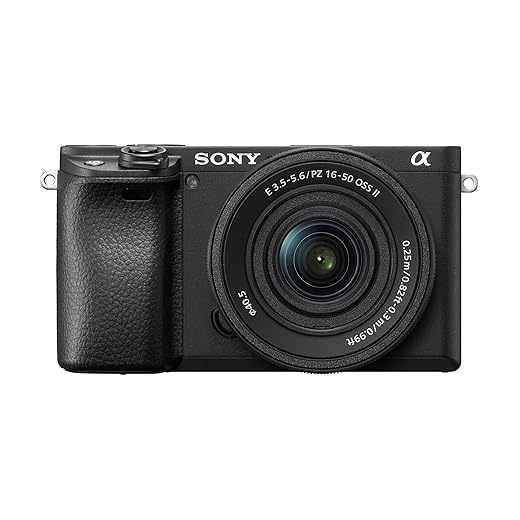
You’ll get class-leading autofocus and excellent 4K image quality in a compact body that’s ideal for active creators. The camera balances professional-level features with a portable design, though you’ll rely on lens stabilization or external solutions for steady handheld footage.
Beginner Friendly
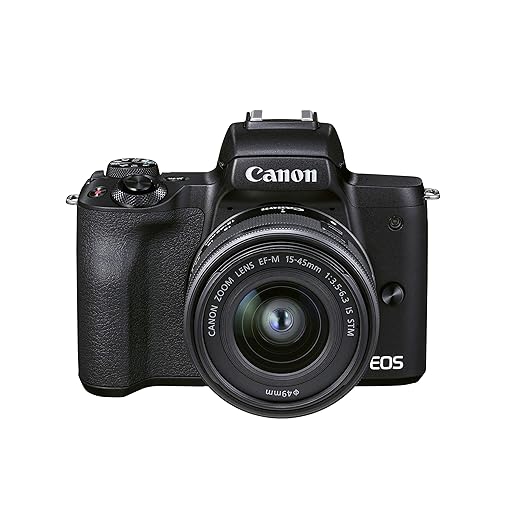
You get an approachable camera that’s tailored to content creators and streamers, with easy controls and solid still-image capability. It’s a strong pick if you value usability and streaming-friendly features, but expect compromises on 4K video and advanced AF compared with higher-end models.
Sony A6400
Canon M50 II
Sony A6400
Canon M50 II
Sony A6400
Canon M50 II
Head-to-Head Specs: Sensor, Image Quality, and Performance
You’ll get a side-by-side look at sensors, resolution, processing, and still-image performance. Below are the practical differences you’ll notice when shooting photos and everyday content.
Sensor and resolution — very similar cores
Both cameras use APS-C sensors with nearly identical megapixel counts (Sony 24.2MP; Canon 24.1MP), so you won’t see a huge resolution gap in normal JPEGs or prints. The practical differences come from sensor readout, noise handling, and processing.


Image processing and dynamic range — Sony pulls ahead
The A6400’s Exmor sensor + BIONZ X pipeline deliver cleaner high-ISO images and a slightly wider usable dynamic range, especially in shadows. The M50 Mark II with DIGIC 8 still produces attractive colors and good JPEG processing, but you’ll see more noise and less headroom when you push exposure in RAW.
Burst speed, buffer and responsiveness
Autofocus for stills — tracking vs. practical accuracy
The A6400’s 425 phase/425 contrast-detection points and Real-Time Eye AF make subject acquisition faster and more consistent, especially for moving subjects and irregular motion. Canon’s Dual Pixel AF on the M50 Mark II is excellent for portraits and stationary subjects and offers broad AF coverage, but it’s less advanced than Sony’s latest tracking algorithms in fast-action scenes.


Quick comparison — what this means for your photos
Renewed note: the M50 Mark II’s lower price (renewed) improves value, but check seller warranty/condition — performance should match new in most cases, but inspect return terms before buying.
Feature Comparison Chart
Video & Vlogging Features: 4K, Screen, and Live-Use Options
4K recording behavior and frame rates
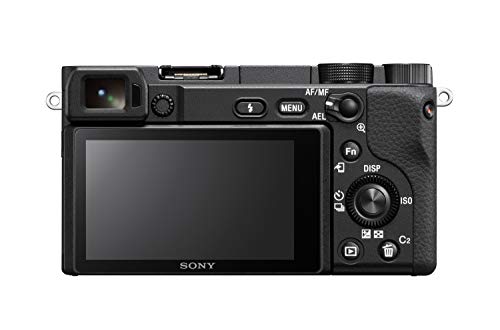
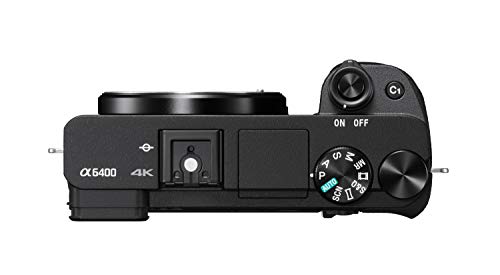
The Sony A6400 gives you clean 4K (UHD) with full-pixel readout for detailed footage and minimal moiré, and you can record 4K up to 30p. For slow-motion you can use 1080p up to 120fps. That makes the A6400 a flexible 4K/slow-motion performer for vlogs and B-roll.
The Canon M50 Mark II records 4K, but it applies a noticeable crop and disables Canon’s best Dual Pixel AF in that mode—so autofocus is weaker and your field of view shrinks. For reliable motion and smooth AF, you’ll often prefer 1080p/60p on the M50 Mark II instead of 4K.


Continuous autofocus in movie mode
You’ll get faster, more consistent subject tracking with the A6400 thanks to Real-Time Eye AF and Real-Time Tracking in video — it holds moving subjects well. On the M50 Mark II, Dual Pixel AF is excellent in 1080p and selfie modes, but in 4K the AF performance and speed drop noticeably.
Screen design for vlogging
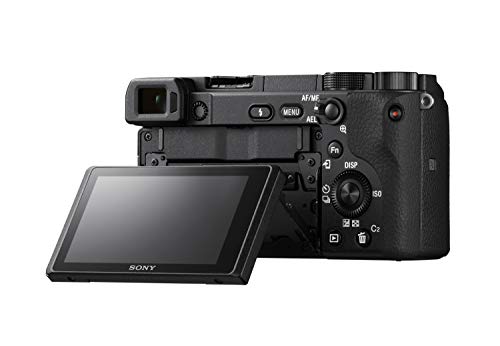
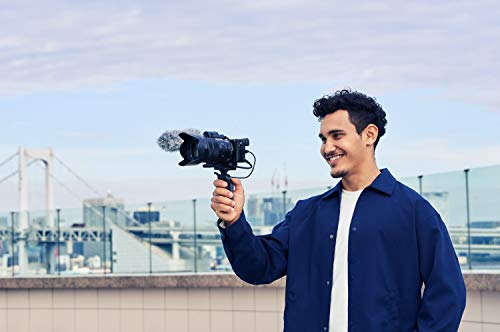
The A6400 uses a 180° tiltable touchscreen that flips up for selfie-style vlogging — compact and simple. The M50 Mark II’s vari-angle (fully articulating) screen gives you more framing flexibility (side-mounted, high, low angles) which is handy for run-and-gun vlogs and rigs.
Microphone, HDMI, and streaming
Both cameras include a 3.5mm mic input (so use an external shotgun or lavalier). Neither has a headphone jack for on-camera monitoring. Both offer HDMI output and can be used with capture cards or manufacturer webcam utilities for streaming; Canon packages easier streaming-friendly features and auto-transcode options.
Practical tips to get clean video
Autofocus, Stabilization, and Low-Light Capability
Autofocus systems and tracking
Sony’s A6400 uses a Fast Hybrid AF with 425 phase-detection points, Real-Time Eye AF and Real-Time Tracking — you get very fast acquisition (~0.02s) and reliable subject hold for walking vlogs, pets, and moving faces across most of the frame.
Canon’s M50 Mark II uses Dual Pixel CMOS AF which is smooth and accurate in 1080p and selfie modes, with extensive AF coverage and eye-detection. However, in 4K the camera falls back to a weaker AF method (or reduced Dual Pixel capability), so tracking is noticeably less confident when you record 4K.


Stabilization approaches and practical shooting
Neither camera has in-body image stabilization (IBIS). That means you’ll rely on:
Use lens OIS + digital IS for casual handheld vlogs; switch to a gimbal when you’re moving a lot. The Canon kit lens (EF-M 15-45) includes optical IS; many Sony kit lenses offer OSS too — check your lens spec.
Low-light sensitivity and AF in dim scenes
Sony’s sensor and processor give the A6400 an edge at high ISO: cleaner images and faster AF responsiveness in low light. The M50 Mark II offers good low-light AF down to about -4 EV in supported modes, but image noise rises sooner at high ISO. For both cameras, you’ll get better results by using fast lenses, adding continuous light, or keeping ISO conservative and relying on noise reduction in post.
Lenses, Battery, Ergonomics, Price and Renewed Considerations
Lens ecosystems & adapter options
Sony E-mount (A6400) gives you a huge, modern lens ecosystem: native APS-C E lenses plus full-frame FE glass from Sony, Sigma, Tamron and others. You’ll find fast primes, compact zooms, and cinema-style lenses for all budgets.
Canon EF-M (M50 Mark II) has a much smaller native lens selection. You can use EF and EF-S DSLR lenses via Canon’s EF-EOS M adapter (sold separately), which expands options but adds bulk and sometimes slower AF. You can also adapt many Canon lenses to Sony bodies with third‑party adapters, often with good AF but at additional cost.
Kit lenses & stabilization
The A6400 kit includes a 16–50mm (compact zoom) — convenient and lightweight but not very fast. The M50 Mark II kit’s EF‑M 15–45mm includes optical IS, which helps handheld video. For serious handheld work you’ll want faster primes or a gimbal because neither body has IBIS.
Batteries & spare needs
A6400 uses Sony’s NP‑FW50; M50 Mark II uses Canon LP‑E12. Video drains batteries quickly on both, so plan to carry spares:
Ergonomics & handheld use
The A6400 (about 403 g with body) is compact with a comfortable grip for extended handheld use. The M50 Mark II is slightly smaller and very pocketable, which helps when you want the lightest setup. Grip comfort depends on the lens you mount.
Price, renewed vs new, and long-term value
Final Verdict: Which Camera Should You Choose?
The Sony A6400 is the clear winner for most vloggers — it gives you reliable 4K, industry-leading real-time eye autofocus, fast 0.02s AF, and a broader lens ecosystem for long-term growth.
Choose the Canon M50 Mark II only if you need a cheaper, user-friendly vari-angle screen for HD streaming and accept renewed-condition limits and 4K compromises. Ready to upgrade your vlogging kit? Pick the A6400 for lasting performance; pick the M50 II to save money now and start creating today confidently.