
I pit the Bosch 2in1 AdvancedTrimRouter against the 18V Bare — and found one delivers pro-level precision while cutting my setup time in half.
When I need precise edges or creative trims, I compare Bosch’s 2in1 combi set and the bare-tool carton AdvancedTrimRouter to evaluate features, performance, usability, and value so you can choose the right option for your projects to guide buying decisions.
Workshop Versatility
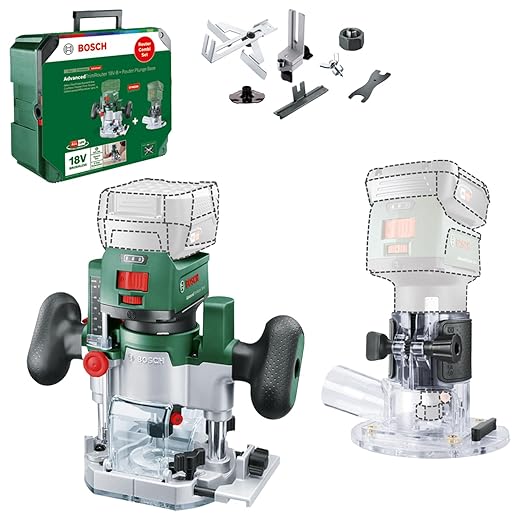
I found this combi router to be a very capable and precise tool for both edge work and plunge milling; the brushless motor and depth turret make repeatable cuts straightforward. I value the included accessories and SystemBox storage, though the unit is noticeably heavier than dedicated trim routers and some aftermarket template parts can be hard to source.
Lightweight Trimmer

I appreciate how effortlessly this unit handles edge work and small routing tasks due to its light weight and compact form factor. It offers reliable brushless performance for DIY and hobby projects, but you should budget for a battery and accept the limitations of a non‑plunge, trim‑only base.
Bosch AdvancedTrimRouter 18V
Bosch AdvancedTrimRouter 18V
Bosch AdvancedTrimRouter 18V
Bosch AdvancedTrimRouter 18V
Bosch AdvancedTrimRouter 18V
Bosch AdvancedTrimRouter 18V
What’s in the box: contents, packaging and first impressions
Bosch 2in1 Combi Set — contents and packaging
The combi set ships as a full kit inside a Bosch SystemBox M. In the box I found:
First impressions — Combi Set
The SystemBox M presentation immediately feels professional and workshop-ready. Metal parts (collets, base fastenings) and the two bases look well finished; the plastic components have a dense, matte Bosch green that feels robust. Inclusion of multiple adapters and the copy ring signals this kit is aimed at serious hobbyists or pros who want out‑of‑the‑box versatility. Packaging protection inside the SystemBox is secure—components sit neatly and won’t rattle in transit.
Bosch AdvancedTrimRouter (Bare) — contents and packaging
The bare-tool arrives in simple carton packaging and does not include battery or charger. In the carton I found:

First impressions — Bare tool
Out of the carton the trim router feels light and neatly finished—same Bosch plastics and brushless motor housing quality as the combi body. Cardboard packaging is functional but less protective; accessories are fewer and boxed loosely, so buyers should plan for extra protection during storage or transport. The absent battery/charger is the biggest practical omission for immediate use.
Power and performance: motor, battery compatibility and cutting capability
Brushless motor, speed and torque
Both units share Bosch’s brushless motor architecture and the same stated maximum speed (30,000 RPM). I find the brushless design delivers strong, consistent RPM under light to medium loads and reduces maintenance compared with brushed motors. In practice that translates to confident performance for edge routing, slotting and decorative motifs; for heavy hogging in dense hardwood you’ll need slower passes and smaller steps to avoid stalling or burning.
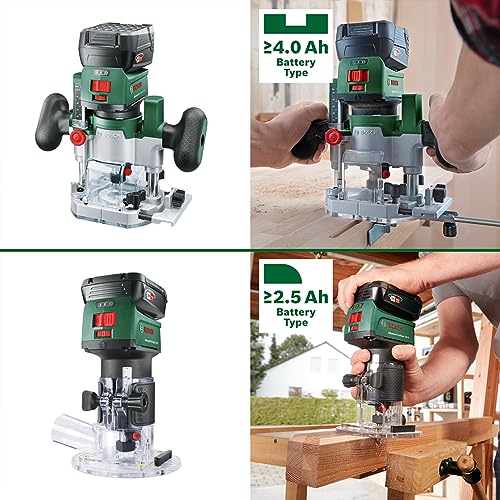
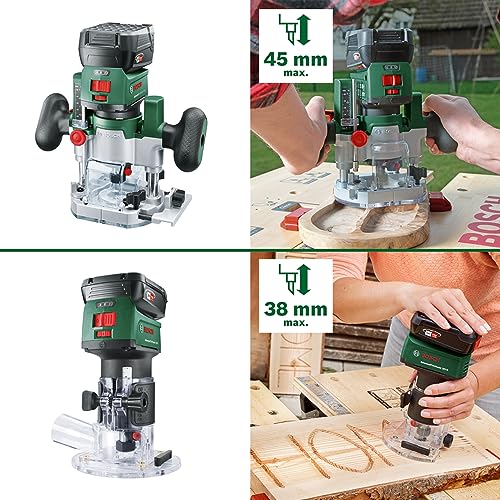
Battery compatibility and expected runtime
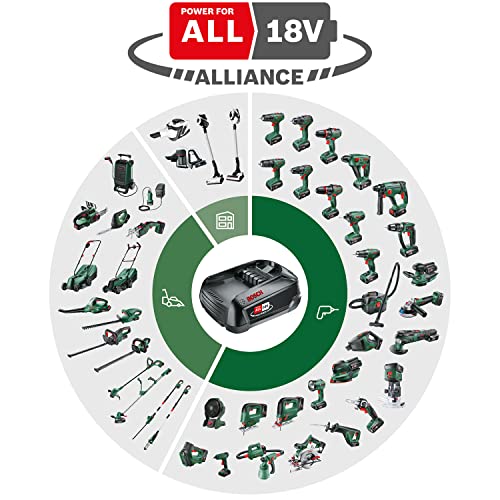
Both tools run on the Bosch 18 V platform. Important: the Amazon bare-tool listing explicitly ships without a battery; the combi kit’s scope here also does not list a battery. Expect to pair either with Bosch 18 V Li‑ion batteries (capacity/Ah determines runtime).
Key points:
Plunge vs trim cutting and depth accuracy
The combi set’s plunge base plus the 7‑step turret stop gives repeatable, mechanical depth settings ideal for islands, stopped slots and template work. The bare trim router (fixed/trim base) is quicker for handheld edge trimming and smaller profiles but lacks true plunge control. In short:


Heat management, vibration and real‑world behavior
Brushless efficiency keeps heat and current draw lower than brushed equivalents. The combi’s heavier assembly and dual bases feel more stable and damp vibration under load; that improves finish when cutting slots or decorative motifs. The lightweight bare unit is nimble for handheld work but shows more vibration and requires slower feeds under tougher loads. Some users report tight tolerances when mounting the router in the plunge base — expect a short break‑in and careful setup for the smoothest operation.
Feature Comparison
Usability and versatility: ergonomics, bases, bit changes and setup
Ergonomics and balance
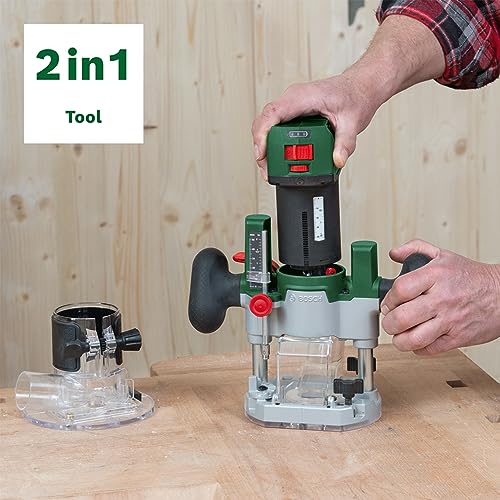
I found the combi set noticeably heavier and more substantial than the bare trim unit. The AdvancedTrimRouter combi (with both bases and SystemBox) feels stable in the plunge base and dampens vibration during deeper cuts; it takes more effort for long handheld passes. The bare AdvancedTrimRouter is very light (≈1.1 kg without battery), nimble for edge work and long sessions, and easier to control for one‑handed trimming.
Switching bases and initial setup
Switching between the trim and plunge bases in the combi is straightforward but benefits from a short setup routine: mount the router, align the centering pin/pilot guide, and fasten the base securely. Expect to spend a few minutes the first time to eliminate play. The bare tool ships in carton with the fixed/trim base assembled — ready to run after fitting a battery and bit.
Bit changes and depth adjustments
Both kits include 6 mm and 8 mm collets and a wrench for clamping bits.
Dust management and battery/accessory compatibility
Both listings include dust extraction adapters (the combi includes adapters for both bases). Both accept Bosch 18 V batteries and Bosch accessories (guides, guide rail adapter, copy rings in the combi).
When the combi adds value vs when the bare router suffices
The combi’s extra bases, copy ring, plunge capability and guide accessories add clear value for template work, stopped grooves, repeatable plunge cuts and workshop tasks. The bare trim router is the better choice for fast, lightweight handheld profiling, rounding and casual DIY where portability and simplicity matter.
Price, value proposition and target buyer
Cost vs. readiness
I weigh the combi set as a higher upfront purchase that delivers out‑of‑the‑box capability: two bases, multiple collets, guides, dust adapters and a SystemBox for organised storage. The bare AdvancedTrimRouter has a much lower entry price but assumes you already own Bosch 18V batteries (or will buy them separately), so total cost can rise if you need a battery and charger.
Combi set — concise pros and cons
Bare router — concise pros and cons
Long‑term value and Bosch 18V ecosystem
I value expandability: both options join Bosch’s 18V system, so batteries, chargers and accessories are transferable across tools — that amortises battery cost over time. The combi set increases immediate utility and may hold resale value better because of included extras and the SystemBox. The bare unit’s value depends on your existing battery investments; resale is straightforward but typically lower without extras.
Who should buy which
I recommend the combi set for hobbyists who want complete capability, workshop users doing plunge and template work, and professionals who need repeatable depth control and accessories ready. I recommend the bare router for DIYers and existing Bosch 18V owners who want a lightweight, low‑cost trim router and already have batteries/chargers.
Final verdict and recommendation
I declare the Combi Set the clear winner for most users: it delivers an out-of-the-box, versatile 2in1 solution with bases and accessories.
Choose the Bare model if you already own Bosch 18V batteries and want a lower upfront cost. Tip: buy the Combi Set for maximum flexibility; buy Bare to save money now. Consider accessories too.

Just bought the combo set last month and used it to trim cabinet doors. The kit saved me time because of the quick base swap and included accessories. Battery life was okay on my 2.5Ah — one full cabinet set and needed a recharge. Lightweight and comfy grip. 👍
Good tip — I have a 4.0Ah and it lasted much longer for me. If you do whole cabinets regularly, step up the battery capacity.
Thanks for the mini review, Ava — great to know the 2.5Ah still handled a full cabinet job. Those real-use details help readers decide between battery size and cost.
Short and sweet: combo = convenience, bare = cheaper if you already own batteries. The brushless motor feels zippy and the plunge base makes cleaner cuts. Also, why does Bosch call everything ‘Advanced’ now? 😂
Totally — the naming is a bit much but the tool itself is solid. Plunge base is underrated.
Ha — marketing loves ‘Advanced’! But in this case brushless tech + two bases does deliver noticeably better performance and versatility vs older trim routers.
Love that you compared the 2in1 combi set to the bare AdvancedTrimRouter — super useful. I own the kit (the one in the SystemBox M) and the two bases are actually a game changer for quick swaps between trim and plunge work. The brushless motor feels noticeably smoother and battery life on my 4.0Ah lasts through a decent number of edging jobs.
If you’re on the fence: get the set if you don’t already have Bosch 18V batteries. If you have batteries from other Bosch tools, the bare tool might be fine — but remember, no battery or charger included with the carton package.
Thanks for sharing your experience, Emma — that’s exactly the kind of real-world detail readers love. For anyone wondering: Bosch 18V batteries are backward-compatible across many Bosch tools, but check the exact battery type and mAh for runtime expectations.
Agree with Emma. I had one battery spare and bought the bare unit — saved cash. But if you need a battery, the kit is worth it. Also, the SystemBox M is handy for storage (keeps bits from getting lost).
Quick note: the kit includes accessories and two milling bases, which is handy for different tasks. The bare version usually comes in carton and is aimed at people who already have Bosch batteries.
I have a question about the plunge base — does the kit’s plunge base allow for micro-adjustments or is it more of a basic lock-and-go style? I do a lot of shallow groove work where precise depth matters.
Also curious about bit changes: are the collets the same between the two models? I’m thinking of buying the bare tool but need to know it matches my existing router bits.
Yep — same collet. I’ve swapped bits between my friend’s kit and my bare unit with zero issues.
If you need extreme precision, consider test cuts and small incremental adjustments. The plunge base is good for typical woodworking precision but not a lab instrument.
Good questions. The kit’s plunge base generally offers finer depth control than very cheap plunge adapters — you can make small adjustments and lock it securely. As for collets: both products are the same model line, so they use the same collet sizes and bit compatibility. Buying the bare tool won’t change that.
Appreciate the clear answers — sounds like the bare unit would be fine if I double-check bit sizes. Thanks!
Micro adjustments exist but don’t expect micrometer-level precision. For very fine tuning, I use a separate gauge to set the bit then lock it in.
Honestly, I’m torn. On paper the combo set looks like the obvious choice — 2 bases, accessories, SystemBox — but for hobby use I wonder if that’s overkill. I do small woodworking on weekends and already have a generic 18V battery from another brand (not Bosch).
Pros: brushless motor, flexible 2in1 design, good build.
Cons: $$$ for the kit, and if you’re not doing heavy work the battery life might feel like overkill or underused? Also packaging differences — carton vs SystemBox — are a small detail but matter if you like neat storage.
Anyone else do light hobby work with the bare unit? How annoying is swapping different-brand batteries (I know they won’t fit, I mean buying a cheap Bosch-compatible one)?
If your batteries aren’t Bosch, they won’t fit — Bosch uses its own 18V platform. For light hobby use, many choose the bare tool if they already invested in Bosch batteries; otherwise the kit saves time and ensures you have the right accessories. Cheap ‘compatible’ batteries are risky (safety, performance).
For hobby stuff the bare one is fine if you already have a Bosch 18V battery. If not, buy a good genuine Bosch battery — lasts longer and safer. Don’t cheap out on cells imo.
Thanks all — makes sense. Guess I’ll look around for a used Bosch battery to keep costs down. 👍
I do weekend projects and bought the kit because of the extra bits and two bases — no regrets. If you want neat storage, SystemBox is worth the extra $ for me.