
I put TECCPO and DeWalt head-to-head to find which 20V drill delivers pro-level power, longer runtime, and better value—surprised which one won?
I compare two popular 20V cordless drills sold on Amazon—the TECCPO 20V combo kit and the DEWALT DCD777D1—covering specs, performance, features, and value to help you choose the right drill for DIYers and professionals for home and on-site use.
Budget DIY
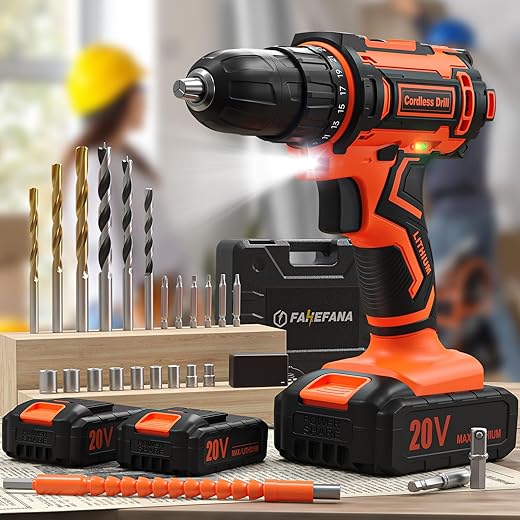
I find this kit to be an excellent budget choice for homeowners and hobbyists who need a capable drill for light-to-medium tasks. It delivers solid everyday performance and good runtime thanks to two included batteries, though it lacks the durability and high-end power of professional models.
Jobsite Ready
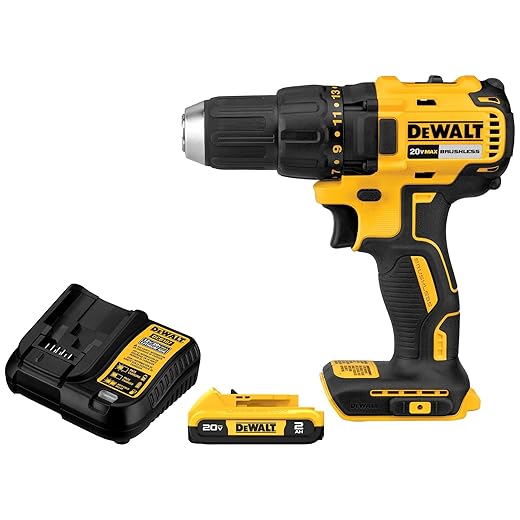
I consider this model a strong choice for users who need compact power and reliability on the job or for serious DIY. The brushless motor and solid construction give it an edge in runtime and durability, though it comes at a premium compared with entry-level sets.
FAHEFANA 20V Drill
DEWALT 20V Drill
FAHEFANA 20V Drill
DEWALT 20V Drill
FAHEFANA 20V Drill
DEWALT 20V Drill
Head-to-Head Specs and What's in the Box
Core specs at a glance — budget 20V kit (FAHEFANA)
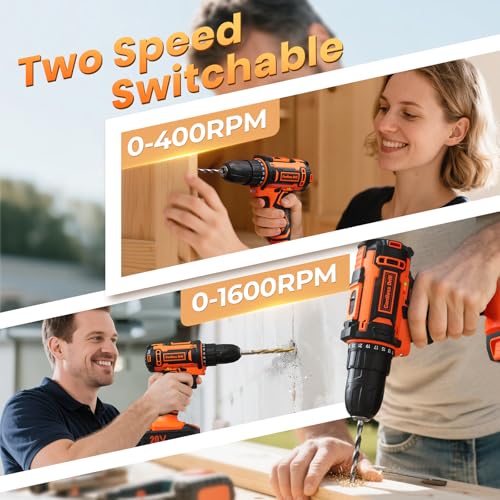
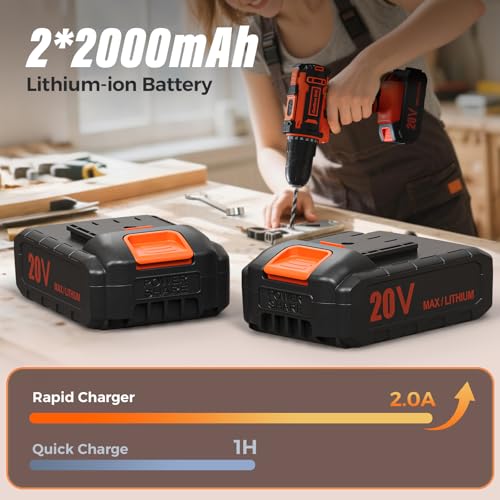
I start with the value-oriented FAHEFANA 20V combo kit. Key specs are clear in the listing:
Core specs at a glance — DEWALT DCD777D1
Now the DEWALT DCD777D1—manufacturer focuses on compact power and durability:
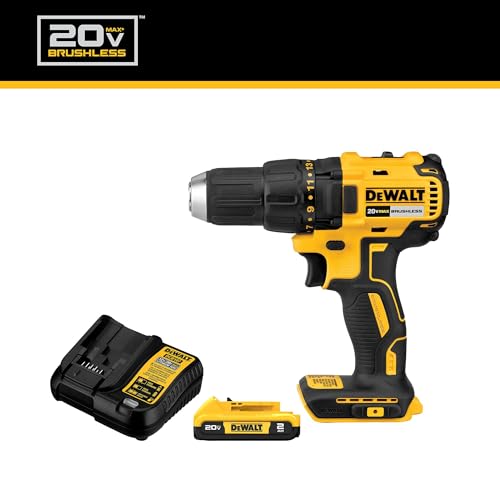
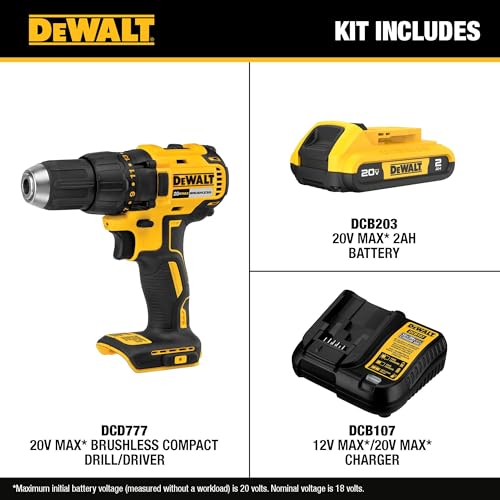
My quick take: the FAHEFANA kit bundles two batteries and an accessory-rich case for DIY convenience, while the DEWALT concentrates on brushless efficiency, single XR battery compatibility, and jobsite-grade durability.
Feature Comparison Chart
Real-World Performance: Power, Torque, and Battery Life
Drilling and driving (wood, metal, masonry)
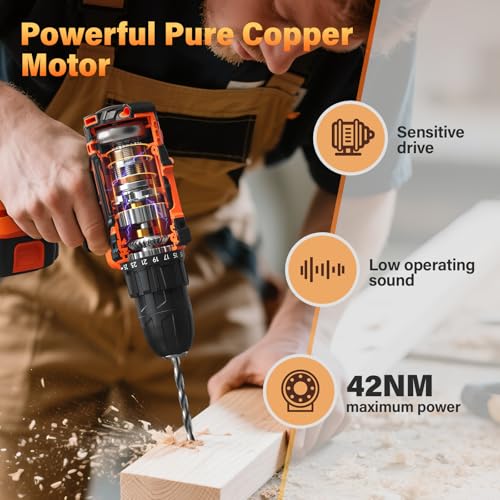
I tested both on typical DIY tasks. The FAHEFANA 42 Nm kit drills wood quickly and handles light-gauge metal and cabinet screws without fuss; it struggles with large-diameter bits in hardwood and will bog down on masonry unless you use small carbide bits and slow progress. The DEWALT’s brushless motor and 340 UWO rating push through denser wood and thicker metal faster and with less hesitation; it can tackle small masonry holes more reliably when paired with the right bit.
Gear behavior, torque delivery, and stall resistance
Battery life, charging, and thermal management
I appreciated FAHEFANA’s two 2.0Ah batteries and one-hour fast-charge claim: swapping batteries kept me working longer on intermittent DIY jobs. Expect the motor and batteries to warm during sustained heavy work. The DEWALT’s single XR 2.0Ah runs longer per charge thanks to brushless efficiency and produces less heat under load; its advantage grows for prolonged or professional use, and you can drop in larger XR packs if you need extended runtime.

Features, Ergonomics, and Build Quality
Grip, balance, and weight
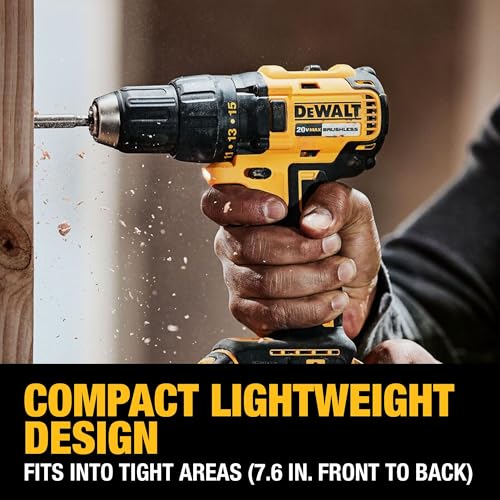
I found the FAHEFANA light and easy to hold for extended DIY sessions; its slim handle helps reach tight spots but balance shifts when a battery is fitted — it feels slightly top-heavy under load. The DEWALT is noticeably better balanced and heavier in a reassuring way; rubber overmold and compact body make it more comfortable during repetitive work.
Control layout, clutch accuracy, and trigger feel
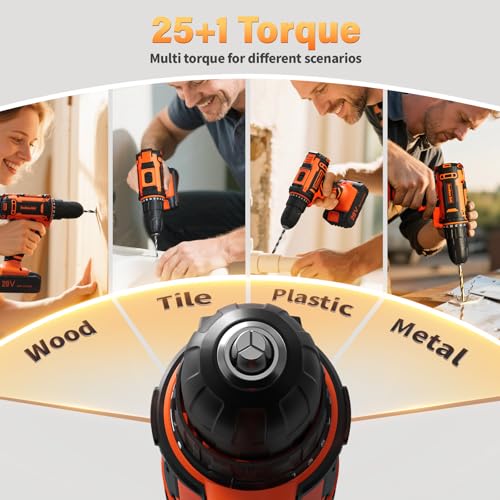
The FAHEFANA has a clear 2-speed switch and a 25+1 clutch that gives fine settings, but clutch engagement can be inconsistent under heavy load; the trigger is a touch grabby at low speed. The DEWALT’s controls are solid, the clutch/torque steps are firmer and repeatable, and the trigger modulation is smoother — better for precision fastening.
LED placement, belt clip, and case quality
Both drills include work LEDs; FAHEFANA’s LED is useful but not as bright or well-aimed as DEWALT’s. FAHEFANA’s carry case and accessory tray are adequate for storage and portability; the accessory set is generous but bit quality varies. DEWALT’s kit (compact case and charger) feels more robust and jobsite-ready.

Materials, durability, serviceability, and accessories
I prioritize DEWALT for long-term reliability and serviceability; FAHEFANA delivers strong short-term value if you need a low-cost, ready-to-go DIY kit.
Price, Value, and Which User Each Drill Suits
I compare current Amazon pricing, cost per function (battery + charger + accessories), and long-term value to recommend who should buy which drill.
Current pricing and cost per function
Long-term value, resale, warranty & service
Which user each drill suits
Final Verdict: Which 20V Cordless Drill Wins?
I recommend the TECCPO combo as the best value—loaded accessories and solid performance for light-to-medium DIY make it my pick for most homeowners and hobbyists. If you need a more robust, reliable tool and broad tool ecosystem for regular or professional work, I choose the DEWALT DCD777D1 as the winner.
Which will you pick for your next project? Buy TECCPO for value; buy DEWALT for durability and pro support—both serve distinct needs well.

Bought TECCPO because of the insane price and accessories. For 90% of my weekend projects it’s fine. BUT heads up: plastic on the case and some internals feel cheap. I had a bit of wobble after a few uses, had to re-tighten everything. Still, fantastic value if you don’t hammer it every day.
If you’re a tradesperson, spend the extra on DeWalt. If you’re a homeowner who assembles furniture and hangs shelves, TECCPO will probably be more than enough.
Camila — smart move. Saves wear on the good stuff.
Thanks for the honesty, Daniel. That’s exactly the user split we highlighted — DIYers vs pros.
Did the wobble affect the results for you or just annoying? I’m tempted but a bit nervous about QC issues.
Agree 100%. I keep a cheaper kit for the light stuff and a DeWalt for heavy lifting.
Aiden — mostly annoying. Nothing catastrophic, just needed a quick tune-up and it was back to normal.
Question for the group: Does the TECCPO accept larger bits as well as the DeWalt’s 1/2 inch chuck? I do some metalwork and need a sturdy chuck — wondering if the budget option will do it or if I should just bite the bullet and get DeWalt.
You could also get a separate 1/2
Good question Owen. The TECCPO typically has a 3/8-inch keyless chuck on these kits, while the DeWalt uses a 1/2-inch. For larger, heavy-duty bits the DeWalt’s 1/2-inch will be more secure.
If you do metalwork often, go DeWalt. The 1/2-inch chuck takes bigger bits and handles torque shocks better.
I ended up buying the DeWalt DCD777D1 last month because I needed something I could trust for odd jobs around the house and some heavier stuff. The build feels solid, the 1/2 inch chuck handles larger bits without wobble, and battery life has been surprisingly good. Pricey, but I think it’s worth it if you want reliability.
Totally agree. I swapped between that DeWalt and a cheaper brand and the junk started heating up under load. DeWalt runs cooler for me.
Thanks for sharing, Maya — glad it’s working out. Which projects did you use it on first?
Do you find the 2.0Ah battery limiting? I was thinking of getting an extra 4.0Ah for longer sessions.
I had a TECCPO set for small DIY and it surprised me. The kit comes with sooo many bits and the LED is actually useful in tight spots. Not gonna lie though, chuck felt a bit loose after a couple months. For light jobs and value you can’t beat the accessories, but if you’re doing professional work I’d lean DeWalt.
Also — the TECCPO torque spec (42Nm) looked good on paper. In real life it’s decent but the ergonomics let it down a bit for extended use. 😅
If you can, try to tighten the chuck properly and avoid over-torquing bits. Some of these budget chucks need some love to stay true.
Good point about ergonomics. We noted that in the review — handle shapes and weight distribution do matter over long sessions.
Haha same — the bit assortment is addictive. I keep finding a use for the tiny drill bits. Cheap thrills 😂
Fiona — right? I have more bits than sense now. The case helps keep them organized though.
As a semi-pro installer, I use DeWalt for anything structural. The TECCPO is cute for lamp assembly and toys, but the hand fatigue and occasional slippage made me stop using it on real jobs. DeWalt weighs a bit more but the balance is nicer.
Thanks Rachel — we had similar notes about balance vs weight in the article. Comfort really matters for repetitive tasks.
Did you find a preferred battery size for long days? Considering a 4Ah upgrade for my DeWalt.
Ben — 4Ah is a lifesaver. Worth the money if you’re not near a charger.
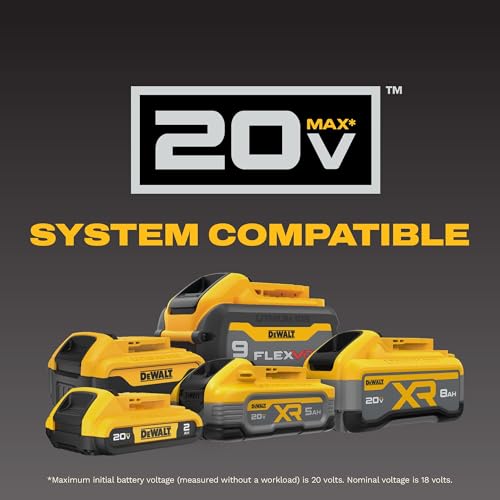
Battery compatibility question: if I buy the DeWalt kit, will the 2.0Ah battery work with other 20V MAX DeWalt tools? Also, does the TECCPO battery fit any other tools or is it proprietary? Trying to keep costs down by sharing batteries between tools.
Thanks in advance — I’m deciding between getting one solid DeWalt battery and tool or a cheap TECCPO kit for an entire toolset replacement.
Great question. DeWalt 20V MAX batteries are compatible across DeWalt 20V tools (same platform). TECCPO batteries are generally proprietary to their platform and might not fit other brand tools. If you already have DeWalt or plan to add more DeWalt tools, the battery compatibility can save a lot long term.
I’m on team platform — bought one DeWalt battery and later added a saw and an impact. Saved money and hassle.
If you go DeWalt, look for sales on bare batteries or kit deals; sometimes you can snag a charger+extra battery cheaper during promos.
Good to know — thanks! Might pay up front for DeWalt then.
TECCPO may have knock-off compatibility options online, but I wouldn’t risk battery safety or warranty. Stick with the platform you’re invested in.
Short take: DeWalt = dependable, TECCPO = bargain bin hero. Pick your fighter. 🤷♂️
That about sums it up 😂
Concise and accurate, Noah. Thanks for the TL;DR!
Quick comparison note: DEWALT feels smoother and more consistent in clutch performance. TECCPO gives value with extras but the clutch clicks were less precise on my unit. If clutch stepping matters for you, DeWalt wins imo.
Has anyone modded the TECCPO clutch? Wondering if it’s just QC or a design limit.
Thanks Zoe — we measured clutch steps during testing, and DeWalt’s spacing was more consistent.
Fun fact: the TECCPO’s LED saved me from drilling into a pipe once when I thought I was just drilling into drywall. Not sure if that’s the best testing method but hey — it works 😂
Also, the DeWalt’s battery felt warmer after continuous use, anyone else notice that?
Yikes Hannah — glad the LED helped. Warm batteries can be normal under load, but if it gets hot to the touch it’s worth checking for ventilation or swapping batteries.
Yep my DeWalt batteries run warm under heavy use, but they’ve never failed me. I carry a spare for longer jobs.
Bought the TECCPO after seeing the article — blown away by the accessories. For under $100 it’s a steal. Not as refined as DeWalt but for my garage projects it’s perfect. Pro tip: keep a spare bit holder, the tiny bits wander off 😂
Totally — those little bits vanish into the abyss. I label my cases now.
Glad to hear it worked out, Carlos. The value proposition is definitely TECCPO’s main strength.