
Huge capacity and rugged features — just don’t let the solar panel be your only plan.
You’re three days into a backcountry trip, your phone is at 2%, and there isn’t a wall outlet for miles — welcome to modern camping panic. When you need reliable juice for maps, cameras, and backups, a tiny pocket charger won’t cut it.
The Vikeri Solar Power Bank 26800mAh answers that problem with high capacity, four output ports including USB‑C, a rugged weather‑resistant shell and emergency extras like a flashlight, SOS/strobe modes and a compass. It gives you dependable multi-device charging on long outings, but treat the solar panel as a very slow emergency top‑up and expect the unit to be bulkier than a pocket power bank.
Vikeri 26800mAh Portable Solar Power Bank

You get large capacity, multiple outputs, and rugged outdoor features that make this a strong companion for long trips away from reliable wall power. Expect dependable multi-device charging and practical emergency tools, but treat the solar panel as a supplemental, slow recharging option rather than your main charging method.
Introduction
When you head into the outdoors you need a power source that can keep up with modern devices and unpredictable conditions. This power bank gives you a high nominal capacity, multiple ports, and physical features built around outdoor use — a bright flashlight, SOS modes, a compass, protected ports, and a carabiner clip. You’ll find the unit useful for camping, fishing, festivals, road trips, and as part of an emergency kit.
Quick specifications (at a glance)
| Specification | Detail |
|---|---|
| Nominal Capacity | 26800 mAh |
| Output Power | Up to marketed 55W peak, USB‑C supported |
| Ports | 4 outputs (mix of USB‑A and USB‑C) |
| Battery Type | Lithium Polymer |
| Weight | ~268 g (manufacturer listing) |
| Dimensions | 19 x 2 x 9 cm |
| Special Features | Solar panel, flashlight (3 modes), compass, carabiner |
| Warranty | 1 year |
Capacity and real‑world runtime
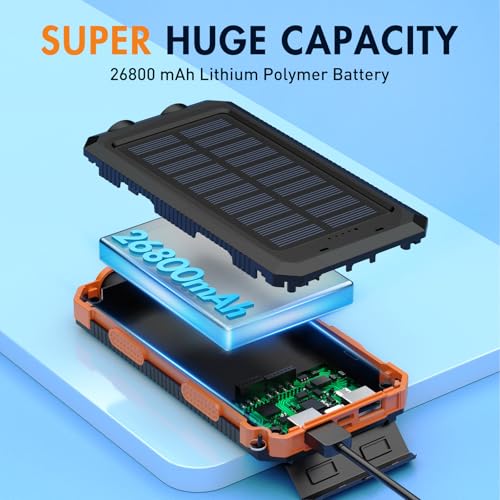
The headline 26800mAh rating gives you significant energy for multi‑day use, but you should plan expectations around real‑world conversion losses. The cell chemistry and voltage conversion inside the pack mean you’ll typically see 60–75% of the nominal capacity delivered to a phone. In practical terms:
Charging speed, ports, and simultaneous use
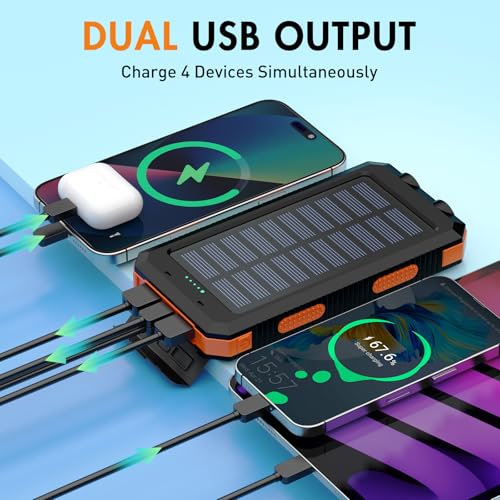
You’ll appreciate the multiple output options when you need to keep more than one device alive. The unit supports USB‑C fast charging and is advertised with a high peak wattage — but actual throughput depends on the cable, device acceptance, and how many ports are active.
Solar panel: emergency backup, not a replacement
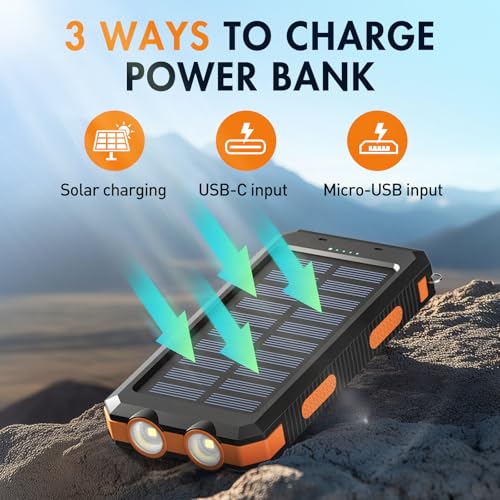
The integrated solar panel is a valuable safety feature, but it’s best seen as an emergency backup rather than a practical daytime recharger.
Rugged design and outdoor features
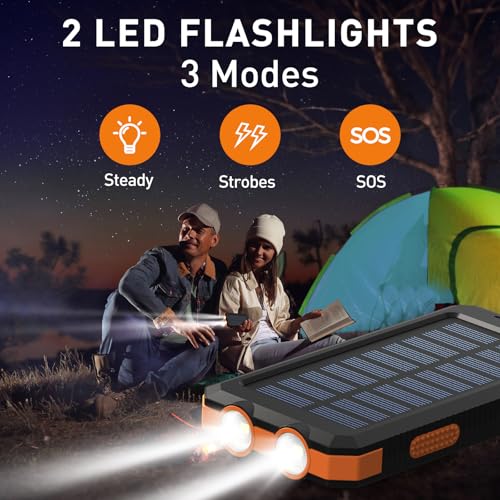
You’ll notice the power bank was designed with outdoor use in mind: port covers to help keep dust and splashes out, a shock‑resistant housing, and a bright set of LED lights. The flashlight includes steady, strobe, and SOS modes that are useful for signaling or lighting a campsite. The built‑in compass is a handy physical backup for basic orientation, and a carabiner loop lets you clip the unit to a pack for hands‑free carriage.
How to use it safely and prolong lifespan
Follow these simple habits to get the best lifespan from your power bank:
Who should consider this power bank
If you spend extended periods away from mains power you’ll benefit from the combination of capacity and outdoor features. Typical users include:
Limitations and realistic expectations
No portable power solution is perfect. Here’s what to keep in mind:
Final thoughts
If you want a resilient, high‑capacity pack that’s built for the outdoors — with multiple outputs, protective covers, and emergency lighting — this model is a solid choice. Use mains or a car adapter when you need fast recharging, and keep the solar feature as a reliable lifeline for situations where wall power simply isn’t available. With sensible expectations and proper care, you’ll find it a dependable addition to your gear for trips, emergencies, and long days away from outlets.
FAQ
No — not for regular use. The built‑in solar panel is best used as an emergency or supplemental charging method. It can top up some energy in strong direct sunlight, but full recharges via the solar panel alone will take many hours or days depending on conditions. For reliable, fast recharges use a wall charger or car adapter.
You can charge multiple devices simultaneously thanks to the four output ports, but total output is shared. Charging two devices will slow each device compared with single‑device charging at peak rates. To maximize charge speed use the USB‑C port and a compatible fast‑charging cable for the primary device.
Yes — the integrated LEDs provide a useful amount of light for signaling, finding items in the dark, and short‑term campsite tasks. The SOS and strobe modes are valuable for emergency signaling. For hands‑free or prolonged tasks you may still prefer a dedicated headlamp or lantern.
Store it partially charged in a cool, dry place. Avoid long‑term storage with the battery fully discharged. Check and top up to around 40–60% every few months if it sits unused for long periods to keep the internal cells healthy.
Most airlines allow power banks up to 100Wh in carry‑on luggage. The manufacturer lists mAh, not Wh; to be safe check the watt‑hour rating with the seller or convert (Wh ≈ mAh × V ÷ 1000). Always carry it in your carry‑on and follow airline rules — do not pack it in checked baggage.
The housing is built to resist dust, splashes, and physical knocks, and port covers help keep contaminants out. However, it’s not invulnerable: avoid prolonged submersion, clean off sand/grit after use, and keep covers closed in wet or dusty conditions to maintain longevity.