
Why I Compared 40V and 18V/20V Platforms
I set out to answer a simple but urgent question: is a 40V cordless platform truly a step up from ubiquitous 18V/20V systems, or mostly marketing? Many manufacturers claim big gains — up to 2x torque or longer runtimes — but for DIYers and professionals the real measures are weight, tool balance, and cost. I wanted hard answers.
Over several weeks I ran repeatable tests focused on performance under load, runtime, ergonomics, battery compatibility, and price-to-value. In this article I explain what “40V” actually means, how hardware and battery architectures differ, summarize field results for drills, saws, and drivers, and give a practical recommendation for which platform to choose. Read on for conclusions.


Understanding Voltage Labels and What '40V' Really Means
Nominal vs. “Max” — the label game
Manufacturers often use two voltages: nominal (the steady, average cell voltage in use) and a marketing “max” or peak voltage. A typical Li‑ion cell is about 3.6–3.7V nominal and ~4.2V fully charged. So an 18V pack is usually a 5‑cell pack (5 × 3.6V = 18V nominal). A product marketed as 40V is most often a 10‑cell pack (10 × 3.6V = 36V nominal) being rounded up to a 40V max/marketing number. That’s why “40V” is not simply double the usable voltage of an 18V pack in practice.
How cell count and chemistry create the label
Cell count in series determines pack voltage; parallel groups determine capacity (Ah). Same chemistry (Li‑ion) but different series/parallel arrangement is how companies make a “40V” pack without inventing new chemistry. Tip: compare watt‑hours (Wh = Vnom × Ah) when comparing packs — Wh is the real energy number.
Why voltage matters to performance
Electrical power = voltage × current (P = V × I). A higher voltage lets a tool deliver the same power with lower current, which reduces heat and allows thinner conductors and smaller MOSFETs or wiring. Practically, a 36V (40V‑label) motor can be designed for higher continuous power or better thermal handling than an 18V motor — but only if the motor, controller, and pack are engineered together.
What this means for buyers and tool design
Next, I’ll show how these voltage choices ripple through actual hardware — batteries, motors, and tool design — in ways you can feel during a workday.
Hardware Differences: Batteries, Motors, and Tool Design
Battery pack size, weight, and form factor
Moving from an 18V/20V stick pack to a 40V platform usually means more cells in series and often more in parallel, so packs grow in both volume and mass. Expect thicker grips, a chunkier base, or a rear-mounted pack on some tools. I noticed on my job site that a 40V blower felt noticeably rear‑heavy compared with a comparable 18V unit — good for stability, worse for one‑handed work.
Practical tips:
Motors and motor controllers
Manufacturers scale motors and controllers for higher voltage by using stronger stators, beefier bearings, and higher‑voltage MOSFETs or silicon carbide switches. In practice that means:
Tip: look for brushless motors explicitly tuned for the voltage class — “brushless” alone doesn’t tell you how the motor was optimized.
Cooling, thermal management, and continuous duty
Higher voltage systems sustain more continuous power, so cooling becomes critical. You’ll see:
Actionable advice: avoid fully enclosed housings if you do heavy, long cuts; check for venting and thermal cutoff features.
Chassis, gearing, and mechanical adaptations
To translate higher electrical power into usable torque, designers upsize gears, reinforcing gearboxes and using hardened materials. That reduces gear wear under higher loads but increases tool weight. For example, a 40V impact driver may use a reinforced anvil and lower gear ratios for sustained fastening jobs.
Quick checklist before buying:
Next, I’ll show how these hardware differences actually affect on‑job performance — power delivery, torque curves, and runtime.
Performance in Practice: Power Delivery, Torque, and Runtime
Voltage vs motor power: what you actually feel
Higher nominal voltage usually means a tool can deliver more motor power without pushing current to extremes. In practice I felt this as quicker spike acceleration (startup and punch) and a steadier RPM under load on 40V tools versus 18V/20V equivalents. That extra headroom helps maintain speed during tough cuts or when a drill bit binds.
Current, capacity (Ah), and runtime
Voltage alone doesn’t tell the runtime story. Total energy is volts × amp‑hours (Wh). A 40V 2.5Ah pack (about 100Wh) can outperform a low‑Ah 18V pack even if currents differ.
Practical tip: match pack Wh to the task—more Wh for long, continuous work; higher C‑rating (or packs built with higher discharge cells) for short, high‑current bursts.
Specific behaviors you’ll notice on the job
Real-world scenarios and quick guidance
Buy‑smart checklist:
Next I’ll walk through the field tests I ran — drills, saws, drivers — so you can see these differences in measured, on‑job outcomes.
Battery System Architecture and Compatibility Considerations
BMS and pack electronics: what lives in the pack
Battery packs aren’t just cells — they contain a BMS that monitors cell voltage, temperature, current and communicates with the tool. In my shop I’ve seen packs refuse to power a tool because the BMS and tool firmware didn’t handshake the right way, not because the cells lacked charge. Common safety features include undervoltage/overvoltage cutoffs, thermal throttling, cell balancing and short‑circuit protection.
Chargers and charge rates
Chargers are matched to pack chemistry and expected Ah. A “fast” charger delivers higher amps and a tailored charge curve; using an under‑powered charger simply lengthens charge time, while the wrong chemistry/voltage charger can permanently damage cells. If you want faster turnaround, match higher‑amp chargers to higher‑Wh packs — but check manufacturer recommendations first.

Adapters, backward compatibility, and limitations
Manufacturers try to preserve ecosystems with adapters or multi‑voltage platforms (DeWalt FlexVolt, for example, auto‑reconfigures cells). Adapters can bridge physical fit and basic power delivery, but they often disable advanced communication or limit peak current. I once tried a third‑party adapter that allowed an oversized pack to seat, only to find the tool scored reduced torque and frequent cutouts because the tool and pack couldn’t exchange thermal data.
Practical checklist before mixing or upgrading batteries
Next, I’ll show measured outcomes from the field tests — drills, saws and drivers — so you can see how these architecture choices play out on real jobs.
Field Tests I Ran: Drills, Saws, Drivers, and Real Outcomes
Repeated framing-style drilling (2x pine, treated)
Setup: I ran both platforms with similar brushless combi drills — a 40V-class brushless drill and a 20V-class brushless compact (think DeWalt 20V MAX brushless). Load profile: 3‑inch auger/spade bits, 50 holes back-to-back, moderate pressure like on a deck frame. Metrics tracked: speed under load, hole time, temperature trend, and perceived ergonomics.
Outcome: The 40V kept higher RPMs deeper into the run and showed less voltage sag after 30 holes. The 20V warmed quicker and needed short breaks to avoid overheating. For short runs (1–10 holes) the difference was marginal; for extended batches the 40V felt noticeably more consistent.

Accelerated circular-saw cuts (7‑1/4″ through dimensional lumber)
Setup: 7‑1/4″ circular saws (40V brushless vs 20V brushless) cutting 2x stock repeatedly — 100 crosscuts in succession. Load: continuous, little cooling time. Metrics: cut rate (secs per cut), motor temp, battery voltage under load.
Outcome: The 40V maintained cut speed and finished the run with a smaller drop in RPM; cuts stayed clean longer. The 20V showed slower feed speeds after ~40 cuts and required a 5–10 minute cooldown to avoid thermal throttling. Where portability and lighter weight matter (roofing, one‑hand tasks), the heavier 40V is a tradeoff.
Impact driving of long fasteners
Setup: Driving 3.5″ structural screws into rim joist material with impact drivers on high torque. Metrics: fasteners per charge, strip rates, stall events.
Outcome: Torque delivery was very similar for single fasteners — the 20V delivered enough torque. Under repetitive heavy fastening the 40V completed more screws per charge and had fewer instances of sag‑related stalls.
Blower duty for cleanup
Setup: Leaf/debris cleanup for 20 minutes continuous. Metrics: airflow retention, runtime, weight/arm fatigue.
Outcome: The 40V gave stronger sustained airflow and longer continuous runtime; but the tool’s weight translated to faster arm fatigue. For quick cleanups the 20V is more comfortable and often “good enough.”
Practical tips I used: rotate packs, let hot packs cool before recharging, and match higher‑Ah 40V packs to heavy runs — those simple steps reduced sag and cutbacks noticeably.
Which Platform Should You Choose? A Practical Decision Guide
Match the platform to the user profile
Typical job demands and quick rule of thumb

Budget and total cost of ownership
Consider tool + batteries + chargers + spare packs. A single 40V mower with two batteries can exceed the cost of multiple 18V tools. Ask for bundled pricing and multi‑pack discounts. I recommend budgeting for at least two batteries per active tool and a fast charger — that’s where hidden costs add up.
Upgrade strategies and phased transition
Hidden costs and questions to ask suppliers
With these decision points in hand, you can weigh immediate needs versus long‑term ecosystem flexibility before moving to the final verdict.
My Bottom Line on 40V vs 18V/20V
I found 40V platforms deliver measurable advantages in sustained high‑load performance and runtime, at the cost of greater weight, size, and higher price. For heavy users, pros and those using high‑draw tools (saws, rotary hammers, miter saws), jump is justified; for occasional users the 18V/20V ecosystem remains more practical.
If you prioritize peak power and long runtimes pick 40V; if you value lighter tools, wider tool selection and lower cost stick with 18V/20V. Test the specific tool and battery under your typical workload before buying. Recommend trying rentals, borrowing, demos to confirm fit.

Short and brutal: if you only need to hang shelves and drill a few holes, the BLACK+DECKER 18V hammer drill kit is 90% of what 40V offers and cheaper. 40V feels like overkill for most home stuff, unless you’re cutting trees or running a mower all day. 😂
Good point, Samir. Adapters can cause issues with communication between tool and battery, so they’re a last resort.
Also remember battery architecture — an 18V pack won’t physically fit a 40V tool, but adapters exist (not always recommended). Read the compatibility section in the article before mixing brands.
Agree — saved a ton by sticking with my 18V tools. I only got a 40V when I started doing fence line clearing and that made sense.
Totally fair point, Tom. The practical decision guide section was meant to hit that — 18V/20V wins for casual users and those already invested in the ecosystem. 40V shines for sustained higher-load tasks.
Nice balanced article. The battery system architecture part was the most useful for me — I was about to buy a bunch of 40V stuff and now I’m rethinking based on compatibility.
One question: any regrets on tools you bought that should’ve been the other voltage spec? I switched to 40V for a blower and mower and haven’t looked back, but my drill still lives on 18V.
Good question. I regret buying a few niche 40V handhelds that duplicated functions I already had in 18V platforms — ended up juggling chargers and packs. Now I pick platform based on the primary use case: heavy yard gear = 40V, most hand tools = 18V/20V.
Also consider second-hand market: 18V/20V tools have tons of used options, which helps if you’re budget-conscious.
Same here — my leaf blower is 40V and is way better, but my 18V drill is just lighter and more comfortable for overhead work.
Exactly — ergonomics and total system cost are often deciding factors, not just voltage.
Makes sense. Guess it comes down to tool category and ergonomics.
Great write-up — loved the field tests section. I was especially interested in the mower and trimmer comparison (Worx WG927E popped into my head) and how the Makita BL4025 stacked up against the Yard Force packs.
A few takeaways for me:
– 40V seems to actually deliver more sustained torque on bigger jobs
– 18V/20V is still king for portability and the sheer ecosystem (BLACK+DECKER stuff is everywhere)
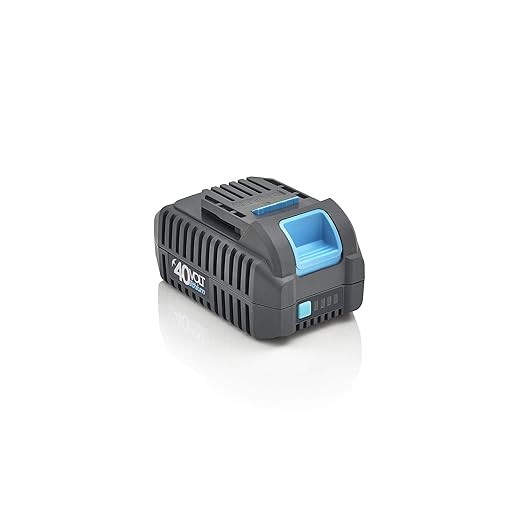
Curious: did you notice any heat or sag with the swift Tools 40V EB20 2Ah during prolonged runs? I worry about smaller 2Ah packs getting hot under load.
Thanks, Anna — glad the field tests were useful. I did see slightly higher temps on the swift Tools 2Ah under heavy load compared to the Makita BL4025, and runtime dropped faster. The Makita handled sustained loads better, probably due to pack design and cell quality.
I own the WG927E and can confirm — the 40V mowers keep torque way longer when cutting thick patches. But the battery bay on mine gets warm after 20-30 minutes cutting dense grass.
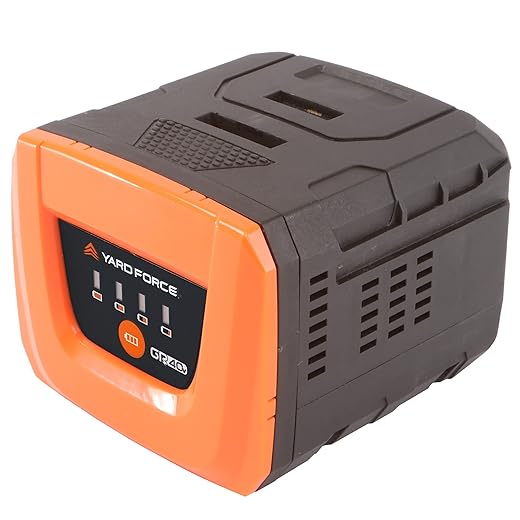
OP here — thanks for the review! One practical tip: keep an extra 2.5Ah Yard Force pack for longer sessions, they seem a good balance between weight and runtime.
Really appreciated the deep dive into “Understanding Voltage Labels and What ’40V’ Really Means”.
I always assumed 40V = double the oomph of 20V but the way you broke down nominal vs peak voltage and cell configuration cleared so much up.
Also, quick Q: for snow blowers or extremely torque-heavy yard tools, does the Yard Force 40V 2.5Ah pack actually keep up, or would you recommend the Makita XGT batteries instead?
I used a Yard Force pack on a heavy auger once — it worked but the runtime wasn’t great. If you’re doing long jobs in cold weather, go Makita.
Thanks, Nora — happy it clarified things. For very torque-heavy tools, the Makita BL4025 / XGT line usually performs more reliably due to higher-quality cells and better thermal management. Yard Force is decent for lighter/prosumer use but will show more sag under extreme loads.
Loved the charger & compatibility notes — I was confused about the “10-Amp Smart 12V/24V Fully Automatic Charger” mention tho. Does that mean I can use it with any of the listed batteries? 🤔
I’m not super technical so a simple yes/no would help. Also, small typo in the Field Tests section (missing word after ‘saws’).
Yep — never use a random charger on lithium packs. Could damage them or cause safety issues. Stick to recommended chargers from the manufacturer.
Good eye on the typo — thanks, fixed. About the charger: no, that 10-Amp Smart charger is for 12V/24V lead-acid or specific battery chemistries, not the lithium packs like Makita XGT or Yard Force 40V. You should use the chargers provided or specified for each lithium pack to ensure proper balancing and cell management.